
Mastering E-E-A-T for Law Firm SEO Success
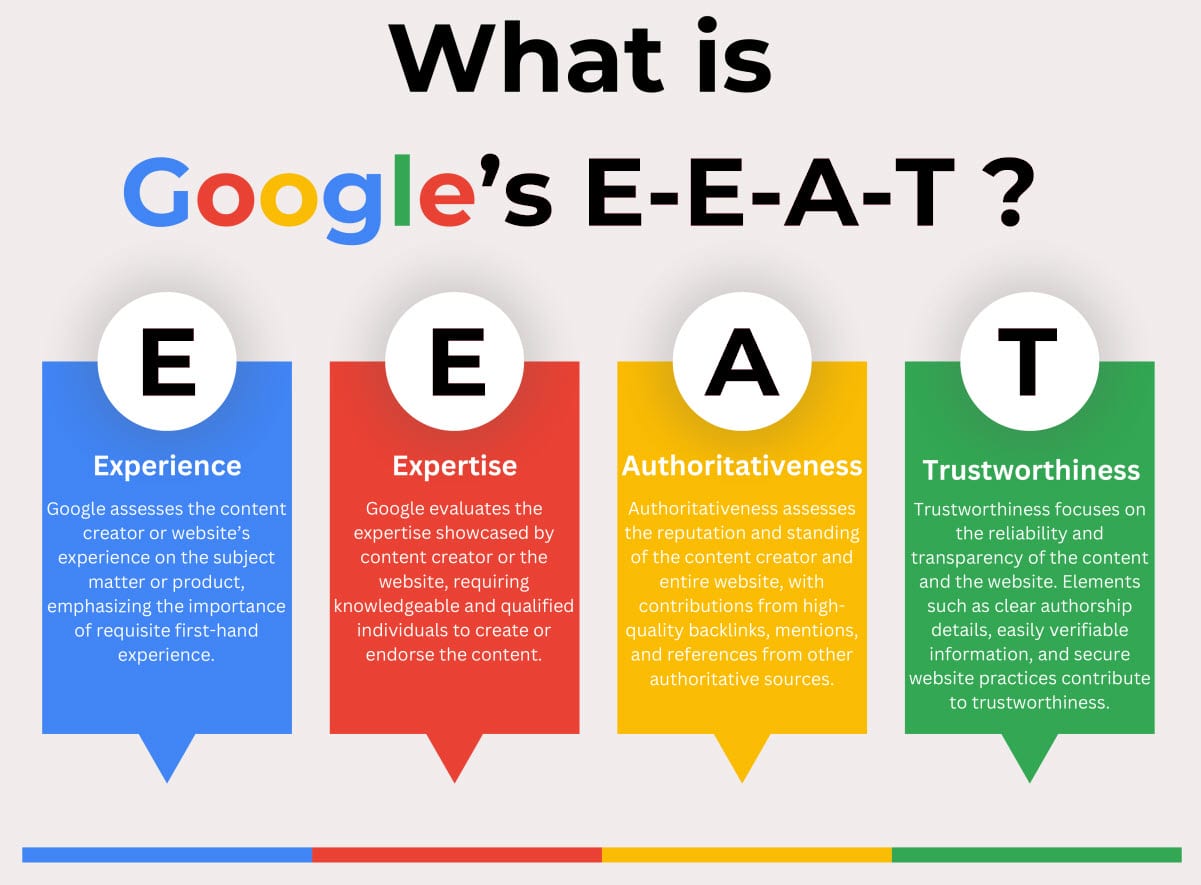
How to Build Expertise, Experience, Authority, and Trust Online for Your Law Firm
E-E-A-T — Experience, Expertise, Authoritativeness, and Trustworthiness — is the set of quality signals Google uses to evaluate legal content and rank law firms for YMYL queries. This blog post explains what each E-E-A-T component means for law firm SEO and shows practical steps attorneys and marketing teams can take to surface verifiable expertise and convert search visibility into client trust.
This guide maps to four focused sections: a definition of E-E-A-T and its legal relevance; concrete tactics for demonstrating attorney credentials; strategies to build firm authority and measurable reputation; and the trust signals that improve client confidence and local conversions. Throughout we use contemporary SEO practices and terms such as E-E-A-T legal, attorney expertise authority, and law firm trust SEO to keep guidance practical and search-aligned.
What is E-E-A-T and Why Does It Matter for Law Firm SEO?
E-E-A-T is a framework Google applies to determine whether legal content should rank for high-stakes queries, and it matters because legal pages are YMYL (Your Money or Your Life) where accuracy and trust affect real-world outcomes. The mechanism works by rewarding signals that demonstrate verifiable expertise and documented experience, which reduces risk for users seeking legal help. As a result, law firm pages that clearly show credentials, client outcomes, and trustworthy processes tend to perform better in search and convert more visitors into consultations. Below is a concise list of primary SEO and business impacts for law firms.
E-E-A-T influences law firm visibility in search in three primary ways:
- It reduces ranking volatility by rewarding pages with clear proof of expertise and a stable reputation.
- It increases click-through and conversion rates when trust signals (credentials, reviews) are visible on landing pages.
- It prioritizes content that demonstrates first-hand experience and authoritative citations for YMYL topics.
These effects make it essential to translate offline credentials into searchable on-page signals, which we examine in the next section on how to demonstrate attorney expertise and credentials.
How Does Google Define Expertise, Experience, Authoritativeness, and Trustworthiness?
Google’s Quality Rater Guidelines describe each E-E-A-T element as evidence-based signals: expertise is verified skill or knowledge, experience is first-hand involvement, authoritativeness is recognized reputation, and trustworthiness is reliability and transparency.
For law firms, these translate into attorney credentials (education, bar admissions), demonstrable case experience (matter summaries, outcomes where permitted), third-party citations (press, journals), and transparent business practices (clear fees, privacy, and retainer policies).
Structuring these items with person schema and article author fields helps search systems associate content with known entities. Translating guideline language into on-site signals lets search algorithms and users quickly verify that the firm and its attorneys can handle the legal issue at hand.
How Can Law Firms Demonstrate Expertise and Attorney SEO Credentials?
Law firms demonstrate expertise by publishing explicit, verifiable attorney profiles, rich explanatory content, and linked authoritative references that corroborate claims. Mechanisms include structured attorney bios, schema markup for lawyers, published practice-area insights, and linked citations to external media or court records. When these elements are combined, search engines more accurately attribute content to qualified authors and surface it for relevant queries. The following short EAV table shows common credential types, where to place them on site, and corresponding schema properties to use.
Attorney credentials mapped to on-page signals:
| Credential Type | On-Page Signal | Schema Property |
|---|---|---|
| Bar admission | Listed in attorney bio with state and year of admission | alumni, hasCredential |
| Education | Degree and institution clearly stated in profile | alumni, educationalCredentialAwarded |
| Publications | Linked article citations with summaries or abstracts | sameAs, worksFor |
This mapping clarifies how each credential becomes a machine-readable verification point for search systems. Presenting credentials this way supports both human readers and structured data parsers. For firms seeking an example implementation, Forward Lawyer Marketing offers tailored “SEO for Lawyers” services that include attorney schema and bio optimization executed in a client-aligned workflow. If you want a practical audit of attorney bios and schema, consider requesting a focused review from that service to identify quick wins and markup gaps.
What Are the Best Practices for Optimizing Attorney Bios and Legal Specializations?
Optimized attorney bios should contain clear identification, verified credentials, specialty focus, representative matters (redacted as needed), and links to authoritative sources that corroborate claims. Use schema.org/Person or schema.org/Attorney markup to expose name, role, bar admissions, education, and published works in structured form.
Maintain a consistent tone that balances professional authority with accessibility, and include contact paths and localized information where appropriate. Linking to external authoritative profiles—court dockets, published commentary, or media quotes—further strengthens authoritativeness and provides citation signals that search engines recognize.
Best practices checklist for attorney bios:
- Include full name, title, and practice area specialization.
- List bar admissions with jurisdiction and year where appropriate.
- Add education, representative matters, and notable publications.
- Implement schema markup for Person/Attorney and include sameAs links to authoritative profiles.
These steps ensure attorney bio optimization provides both human trust and technical signals for improved discovery and credibility.
What Strategies Build Law Firm Authority and Online Reputation?
Building law firm authority requires a coordinated mix of link acquisition, thought leadership, media engagement, and strategic case studies that demonstrate outcomes and legal reasoning. The mechanism works because authoritative third-party mentions and high-quality backlinks serve as endorsements that search engines treat as evidence of subject-matter leadership.
Firms should prioritize producing original analysis, speaking at industry events, and contributing to reputable publications to generate citation-worthy content and natural linking. Below is a prioritized list of authority-building strategies you can implement.
Top authority-building strategies for law firms:
- Publish original legal analysis and practice-area research to attract citations.
- Pursue media commentary and contribute articles in reputable industry outlets.
- Create high-value case study pages and resource hubs that earn backlinks.
These strategies produce measurable outcomes such as referral traffic, increased backlink profiles, and improved brand mentions across authoritative domains. To illustrate practical application, Forward Lawyer Marketing has executed agency-led campaigns combining targeted link building, PR outreach, and thought leadership planning; those campaigns produced measurable backlink growth and referral traffic increases in client case studies available on request. The next subsection explains specific link and thought-leadership tactics that drive those results.

How Do Link Building and Thought Leadership Enhance Legal SEO Authority?
High-quality links from relevant, authoritative legal and news sites signal to search engines that a firm contributes valuable expertise, which improves domain authority and topical relevance. Thought leadership—timely commentary, whitepapers, and op-eds—creates natural citation opportunities and can be repurposed into SEO assets like cornerstone content and linkable resource pages.
Tactical approaches include pitching reporters with unique legal perspectives, guest authoring on trade publications, and publishing research that other professionals will reference. Measuring success involves tracking referral traffic, new referring domains, and ranking lifts for targeted practice-area keywords, which together demonstrate both immediate visibility and long-term authority gains.
| Strategy | Outcome (Metric) | Typical Timeframe |
|---|---|---|
| Guest articles on industry sites | New referring domains and backlinks | 3–6 months |
| Original research / whitepapers | Citation growth and inbound leads | 6–12 months |
| PR placements and expert commentary | Brand mentions and referral traffic | 1–3 months |
This comparison clarifies expected outcomes and pacing so firms can prioritize scalable authority tactics that align with internal resources and business goals.
Do Trust Signals Improve Legal Website Credibility and Client Confidence?
Yes — trust signals materially improve both user confidence and search trust by reducing perceived risk and proving transparency. Trust signals include technical hygiene (HTTPS, privacy policy), visible client reviews and testimonials, clear firm contact information, and verified local presence through Google Business Profile optimization. Each signal affects user behavior differently: technical signals improve engagement and indexing, reputation signals increase conversions, and local signals drive calls and in-person visits. Below is a short list of essential trust signals that every law firm website should prioritize.
Essential trust signals for law firms:
- HTTPS and clear privacy and terms pages to protect user data.
- Consistent NAP (name, address, phone) and structured contact pages.
- Verified client reviews and third-party testimonials that reflect outcomes.
- Complete Google Business Profile and local citations for local trust.
These elements work together to reduce friction in the client journey and improve metrics like time on page and click-to-call rates. The following table links trust signals to SEO impact so teams can prioritize improvements.
| Trust Element | Trust Signal | SEO / Conversion Impact |
|---|---|---|
| Technical hygiene | HTTPS, accessible site, privacy policy | Better indexing and reduced bounce rate |
| Reputation | Reviews, testimonials, third-party mentions | Higher click-through rates and stronger conversions |
| Local presence | Google Business Profile completeness and verification | Improved local pack visibility and map rankings |
| Transparency | Fee structure clarity and attorney disclosures | Increased user confidence and consultation intent |
Implementing these trust-building items strengthens both search ranking signals and real-world conversion outcomes. For local trust specifically, Google Business Profile optimization is critical: ensure profile completeness, consistent NAP across citations, proactive review generation and response, and regular posts to demonstrate activity. Forward Lawyer Marketing provides GBP optimization as part of broader local SEO services, focusing on verification, review strategy, and citation consistency to improve local visibility and client trust.
What Role Does Google Business Profile Optimization Play in Establishing Local Trust?
Google Business Profile optimization directly supports local E-E-A-T by making verified firm information and client reviews visible at the moment of search, which drives clicks and phone calls. Best practices include completing all profile fields, maintaining consistent NAP across citations, encouraging and responding to client reviews, and using posts to highlight practice updates or client resources.
Monitoring GBP metrics such as calls, direction requests, and profile views provides immediate feedback on local demand and helps prioritize local content and reputation work. When GBP is optimized alongside on-site trust signals and structured data, firms create a cohesive local presence that both users and search engines recognize as reliable.
| Local Task | Implementation Tip | KPI to Monitor |
|---|---|---|
| Profile completeness | Fill out all profile fields and upload high-quality photos | Profile views |
| Review strategy | Ask clients for reviews after resolution and respond promptly | Review volume and sentiment |
| Citation consistency | Ensure identical name, address, and phone number across directories | Local pack ranking |
This checklist helps firms operationalize local trust building and measure improvements in local search performance and client engagement.
Contact Our Law Firm SEO Professionals Today
At Forward Lawyer Marketing, we’ve helped law firms throughout the United States expand their client base and enhance their local law firm’s visibility through services such as SEO, Website & Google Business Profile Optimization, Social Media Marketing, Local SEO, and more. If you want to boost your law firm’s visibility in your local area and attract more clients, please call us at (888) 590-9687 for your free consultation and website audit.
