
Law Firm Website Design Services: Essentials for 2025

In today’s digital-first world, having a strong online presence is crucial for law firms looking to attract and retain clients. Law firm website design services play a pivotal role in creating websites that not only look professional but also function seamlessly to convert visitors into clients. As we approach 2025, the demand for specialized web design tailored to legal professionals continues to grow, making it essential for firms to invest in high-quality solutions. In this blog post, we will explore the key elements, trends, and considerations when selecting a provider for law firm website design services.
For many potential clients, your website serves as their first—and sometimes only—interaction with your firm. It needs to communicate trust, authority, and accessibility within seconds of landing on the page. To stand out in a competitive market, it's important to work with experts who understand the unique needs of law firms. Companies like / specialize in delivering tailored law firm website design services that align with modern standards and client expectations. Now, let’s dive deeper into what makes these services so vital.
Understanding the Unique Challenges of Law Firm Website Design
Designing a website for a law firm isn’t the same as building one for a retail store or restaurant. Legal websites require a delicate balance of professionalism, clarity, and compliance. The stakes are higher because potential clients visiting your site are often dealing with stressful situations and need reassurance that they’re in capable hands. A poorly designed website can harm your reputation before you even get a chance to connect with prospects.
Additionally, law firms face unique pressures such as maintaining confidentiality, adhering to ethical guidelines, and showcasing expertise without overwhelming visitors with complex jargon. These challenges highlight why partnering with experienced professionals in law firm website design services is critical. Moving forward, we’ll explore the specific features that make a legal website truly effective.
Key Elements of Effective Law Firm Websites
A well-designed law firm website should immediately convey its value proposition through clear messaging and intuitive navigation. Attorney profiles are particularly important, as they allow potential clients to learn about the people behind the practice. Including professional photos, detailed bios, and areas of expertise helps humanize your team and build trust from the start.
Testimonials and case results further reinforce credibility by providing social proof. Calls to action (CTAs), such as “Schedule a Consultation” or “Contact Us Today,” guide users toward taking the next step. Together, these elements create a cohesive experience that not only informs but also motivates engagement. With this foundation in place, let’s examine some of the latest design trends shaping the industry.
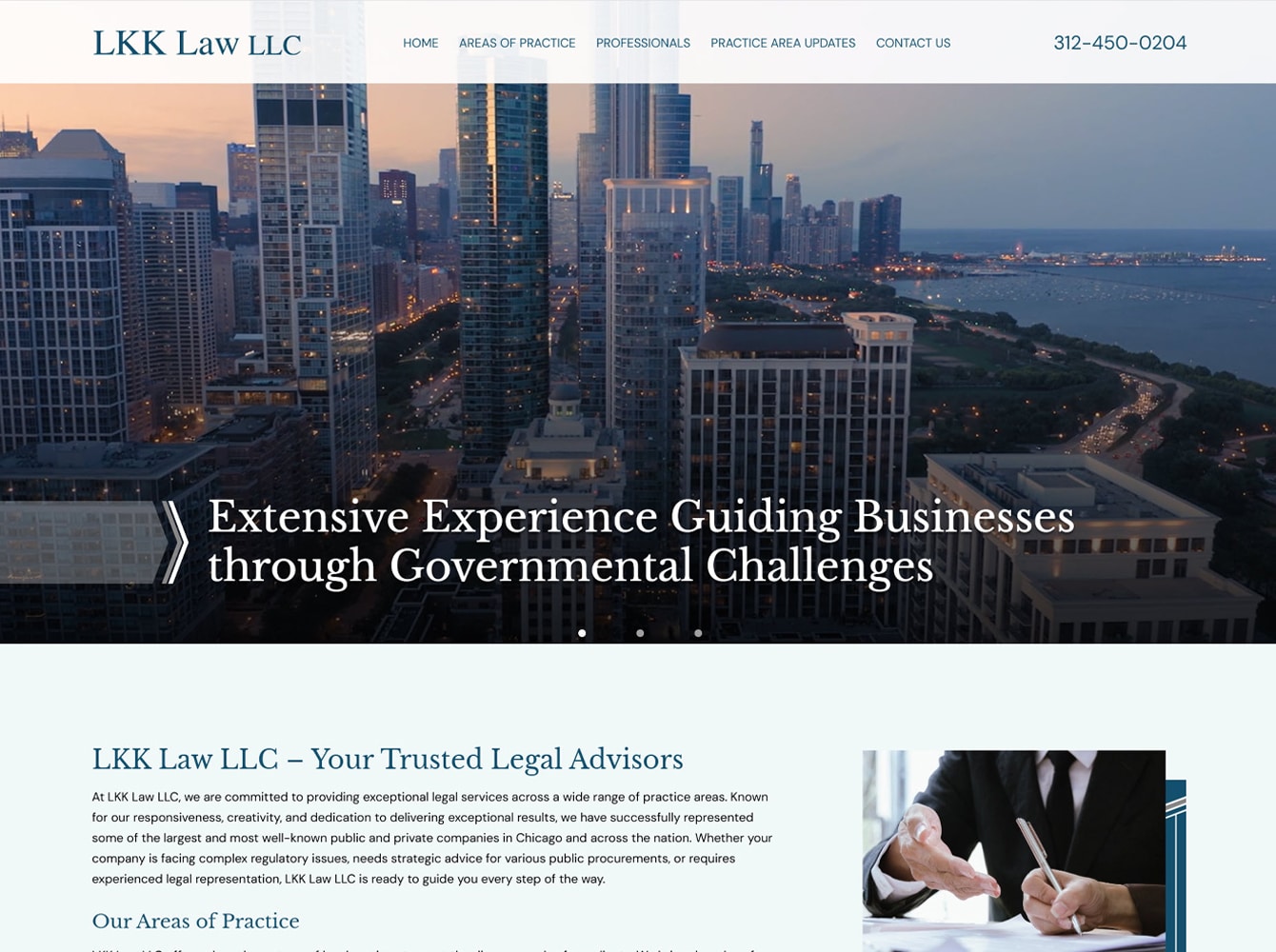
Modern law firm websites go beyond functionality; they tell a story. Narrative-driven designs use compelling visuals and concise copy to engage visitors emotionally while addressing their pain points. Consistent branding ensures that every page reflects the firm’s identity, fostering recognition and loyalty over time.
Design Trends for Law Firm Websites in 2025
As technology evolves, so do user expectations. In 2025 and beyond, mobile-first layouts will remain a top priority, ensuring that websites look great and perform flawlessly across all devices. Full-page headers with striking visuals capture attention instantly, setting the tone for the rest of the site. Customizable dark modes cater to user preferences, enhancing readability and reducing eye strain during extended browsing sessions.
High-quality imagery and consistent color schemes continue to play a significant role in projecting authority and trustworthiness. For example, using professional photos of attorneys at work or in meetings conveys authenticity. Similarly, sticking to a cohesive palette reinforces brand identity and creates a polished appearance. Next, we’ll discuss how user experience and accessibility contribute to a successful website.
User Experience and Accessibility
Seamless navigation and fast load times are non-negotiable aspects of any successful website. Visitors expect quick answers and smooth interactions, especially when seeking legal assistance. Accessibility is equally important, ensuring that individuals with disabilities can access your content easily. This includes features like alt text for images, readable typography, and sufficient color contrast.
An inclusive design benefits everyone, not just those with specific needs. By prioritizing ADA compliance, law firms demonstrate their commitment to serving all clients fairly. Moreover, accessible websites tend to rank higher in search engine results, offering an additional advantage. With these principles in mind, let’s focus on why mobile optimization deserves special attention.
Mobile Optimization: A Non-Negotiable
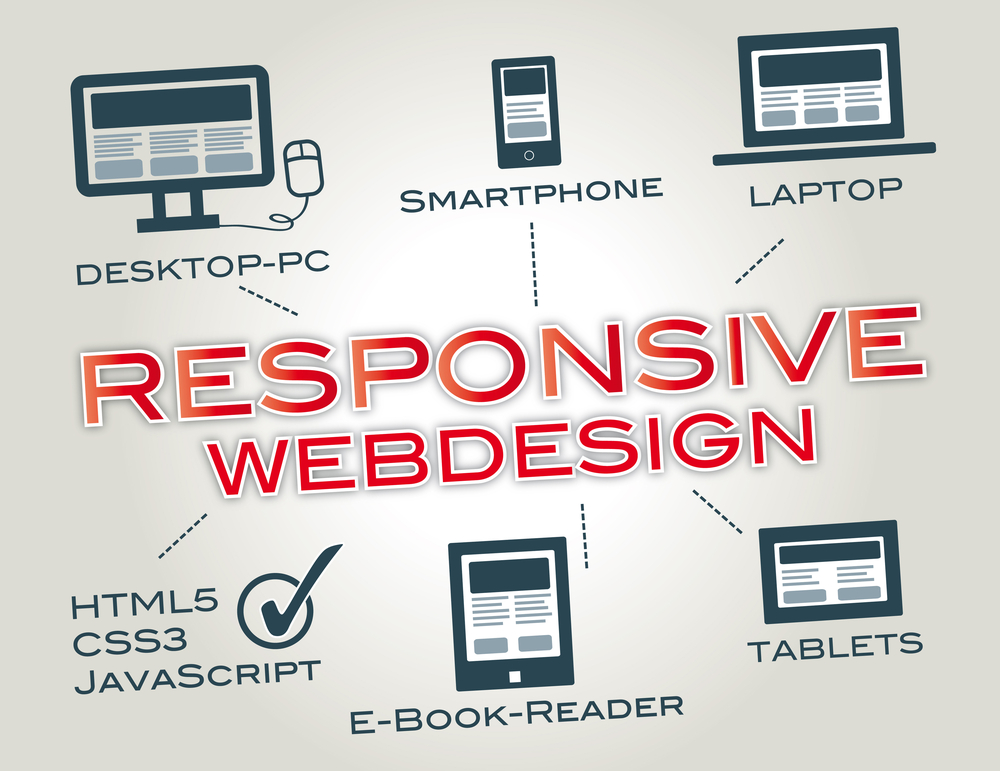
Over 60% of legal website traffic now comes from mobile devices, underscoring the importance of mobile optimization. A responsive design ensures that your site adapts to different screen sizes, delivering a consistent experience regardless of whether users browse on a phone, tablet, or desktop. Slow load times or awkward layouts can frustrate visitors and drive them away.
To optimize for mobile, prioritize streamlined menus, large clickable buttons, and minimal scrolling. Interactive elements like chatbots or appointment schedulers enhance convenience, encouraging users to take action. As we move into discussing content strategy, remember that even the best design won’t succeed without meaningful, engaging content.
Content Strategy for Law Firm Websites
Content is king, even in the legal field. Writing in plain language helps demystify complex topics for potential clients, making your firm more approachable. Anticipating common questions, such as “What happens during a consultation?” or “How long does my case take?” shows empathy and builds trust early in the relationship.
Resource centers and FAQs are excellent tools for demonstrating expertise while assisting users. They also improve SEO by targeting relevant keywords naturally. When crafting content, always aim to educate rather than overwhelm. Speaking of SEO, let’s explore how optimizing your site can drive qualified leads to your firm.

SEO Best Practices for Law Firm Websites
Search engine optimization (SEO) is essential for increasing visibility and attracting potential clients. On-page optimization involves using targeted keywords, meta descriptions, and header tags effectively. Structured data, such as schema markup, helps search engines understand your content better, improving click-through rates.
Incorporating LSI (Latent Semantic Indexing) keywords enhances relevance without keyword stuffing. Alt text for images and descriptive file names also boost SEO performance. By implementing these strategies, law firms can rank higher in search results and reach their ideal audience. However, none of this matters if your site lacks proper security measures.
Security and Privacy Considerations
Given the sensitive nature of legal information, robust security is paramount for law firm websites. SSL certificates encrypt data transmissions, protecting both your firm and your clients. Secure payment portals and encrypted client portals ensure confidential communications remain private.
Regular security audits and updates protect against vulnerabilities and cyber threats. Transparency about privacy policies reassures clients that their data is safe. With security covered, integrating advanced legal tech tools can further streamline operations and enhance client satisfaction.
Integration with Legal Tech and Automation Tools
Modern law firm websites benefit greatly from integrating automation tools like dynamic intake forms, appointment scheduling systems, and client portals. These features save time for both attorneys and clients, leading to improved efficiency and satisfaction. Online payment options add convenience, removing barriers to closing cases or collecting fees.
Automation reduces administrative burdens, allowing lawyers to focus on practicing law rather than managing logistics. When choosing a provider for law firm website design services, ensure they offer expertise in incorporating these technologies. Next, we’ll discuss how to select the right partner for your project.

Choosing the Right Law Firm Website Design Service Provider
Selecting the right vendor requires careful evaluation. Look for providers with proven experience in the legal industry, as they’ll understand your unique challenges and goals. Review portfolios to assess their design quality and check references to confirm reliability.
Transparent pricing models and knowledge of compliance standards are also key factors. Providers like / excel in delivering tailored solutions that meet the demands of modern law firms. Once your site is live, measuring its performance becomes the next priority.
“LSI keywords are terms that are closely tied to your content’s topic. And LSI keywords are GREAT for SEO.” -Backlinko
Measuring Website Performance and Ongoing Improvements
Tracking metrics such as traffic volume, lead conversion rates, and bounce rates provides valuable insights into your website’s effectiveness. Regular audits help identify areas for improvement, ensuring your site stays competitive and aligned with evolving trends.
Ongoing updates—whether refreshing content, tweaking design elements, or adding new features—are necessary to keep your site relevant. Firms that invest in continuous refinement see better outcomes over time. Let’s address some frequently asked questions to wrap up our discussion.
Frequently Asked Questions
How much does a law firm website design service typically cost?
Costs vary widely based on complexity, customization, and included features. Basic packages may start around $3,000, while fully customized solutions can exceed $20,000 depending on requirements.
Why is mobile optimization so important for legal websites?
With over 60% of legal searches happening on mobile devices, failing to optimize for mobile can result in lost opportunities. A poor mobile experience frustrates users and damages credibility.
What security features should my law firm website include?
Essential security features include SSL certificates, secure client portals, encryption protocols, and regular vulnerability scans to safeguard sensitive data.
How do I ensure my website is ADA-compliant?
Implement features like readable fonts, color contrast adjustments, alt text for images, keyboard navigation support, and periodic accessibility testing to comply with ADA guidelines.
How often should a law firm website be redesigned or updated?
Redesigns are recommended every 2–3 years or sooner if there are major changes in branding, services, or regulatory requirements affecting your firm.
Contact The Website Design Professionals At Forward Lawyer Marketing
An effective law firm website is no longer optional—it’s a necessity for thriving in today’s competitive landscape. By investing in professional law firm website design services, you position your firm as trustworthy, credible, and client-focused. From mobile optimization to integrated tech tools, each aspect contributes to a superior user experience that drives growth.
Ready to elevate your online presence? Reach out today to discover how specialized law firm website design services can help you build trust, improve client experience, and grow your practice. Key takeaways: prioritize clarity and professionalism, maintain mobile-first and ADA-compliant design, and leverage integrated technology for streamlined workflows and better client outcomes.
Besides top-rated website design for lawyers, our law firm marketing consultants can also help you strategize on how to increase visitors and drive new inbound leads to your firm. Examples include PPC campaigns like Google Ads for highly targeted audiences, search engine optimization (SEO) for organic search traffic, and Google My Business integration and optimization for local SEO and service area optimization.
There are benefits to specialization, to having your law firm’s website designed by a professional website design agency for lawyers. For more context on what we do, check out what our clients are saying. To set up a time to discuss your needs, please contact us online today or call us at (888) 590-9687.
