
Boost Law Firm Visibility With Local SEO Strategies
Why Local SEO Matters For Law Firms
Local SEO is one of the most important growth channels for law firms because legal clients usually need help in a specific city, county, or state. A person searching for a divorce lawyer, DUI attorney, personal injury lawyer, estate planning attorney, immigration lawyer, or business litigation firm is rarely looking for a national explanation alone. They want a lawyer who understands the local courts, local procedures, state law, and the practical realities of their market.
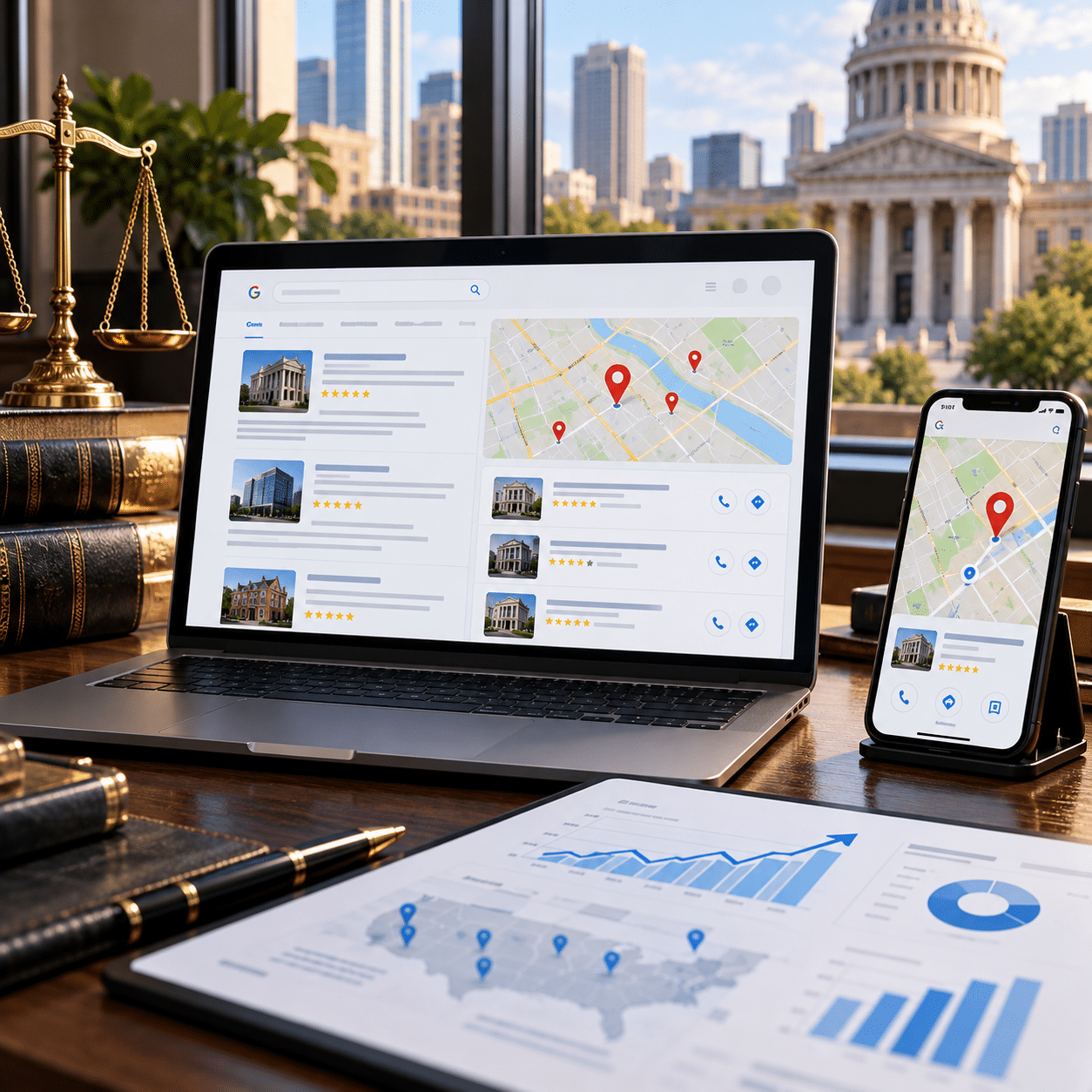
For law firms, local visibility is not just about showing up in Google Maps. It is about earning visibility across the Local Pack, organic search results, Google Business Profile, local landing pages, legal directories, review platforms, and AI-assisted search experiences. A strong local SEO strategy helps Google understand who the firm is, what services it provides, where it practices, and why prospective clients should trust it.
Forward Lawyer Marketing approaches local SEO as a complete visibility system. The goal is not simply more traffic. The goal is more qualified calls, consultation requests, and signed cases from the geographic markets and practice areas that matter most.
Understand How Local Search Works
Relevance, Distance, And Prominence Drive Local Visibility
Google describes local ranking through relevance, distance, and prominence. Relevance means how well the firm’s profile and website match the user’s search. Distance considers proximity to the searcher or searched location. Prominence reflects how well known and trusted the business appears to be across Google and the broader web.
Law firms cannot fully control distance, but they can improve relevance and prominence. That means selecting accurate Google Business Profile categories, completing services, building strong local practice pages, earning ethical reviews, maintaining consistent citations, and developing authoritative local links.
A firm that wants to rank for “truck accident lawyer in Chicago” or “DUI lawyer in Houston” needs more than a city name on a page. The firm needs local signals that support both the service and the location.
Map Pack And Organic Results Require Different Signals
The Local Pack and traditional organic results overlap, but they are not identical. A firm may rank organically for a legal topic without appearing strongly in Maps, or it may appear in the Map Pack while its website lacks deep content.
The best strategy supports both. Google Business Profile optimization helps the firm compete in local map results, while strong practice area pages, attorney bios, local content, and internal linking help the website compete organically. Law firms that treat GBP and website SEO as separate projects often miss opportunities.
Optimize The Google Business Profile
Choose Accurate Categories And Services
The Google Business Profile is often the first impression a legal prospect sees. The primary category should reflect the firm’s main practice focus as accurately as possible. Secondary categories should be relevant and truthful, not added only to chase unrelated searches.
The services section should identify the firm’s real practice areas. A criminal defense firm might include DUI defense, domestic violence charges, drug crimes, assault, theft, and expungement where applicable. A family law firm might list divorce, child custody, child support, maintenance, mediation, and post-decree enforcement. A personal injury firm might list car accidents, truck accidents, wrongful death, premises liability, and serious injury claims.
These services should align with the website. If the profile says the firm handles truck accidents, the site should have a strong truck accident page.
Keep Information Complete And Current
Profile accuracy matters. The firm’s name, address, phone number, hours, website link, services, photos, and business description should be current. If an office moves, a phone number changes, or the firm rebrands, the Google Business Profile must be updated quickly.
The profile should also use professional photos. Attorney portraits, office images, exterior signage, and accurate brand visuals can improve trust. Generic stock imagery is less persuasive than authentic firm presentation.
Build Local Practice Area Pages
Match Legal Services To Geographic Intent
Local landing pages should combine practice area relevance with real geographic context. A page for “Chicago car accident lawyer” should not be a generic car accident page with “Chicago” inserted a few times. It should explain the kinds of claims the firm handles, the local market served, relevant roadways or local issues where appropriate, and how state law affects injury claims.
The same principle applies to family law, criminal defense, estate planning, employment law, immigration, and business litigation. Local pages should help users understand whether the firm is appropriate for their matter in their jurisdiction.
Avoid Thin City Pages
Many law firms weaken their websites by creating dozens of nearly identical city pages. Thin local pages may fail because they provide little value and can compete against each other.
A better strategy is to build fewer, stronger local pages for the markets that matter most. Each page should have unique substance, accurate local context, relevant internal links, and a clear call to action. Quality matters more than geographic volume.
Strengthen Reviews And Reputation Signals
Build An Ethical Review Process
Reviews influence both visibility and conversion. A law firm with recent, detailed, credible reviews is more likely to earn trust than a competitor with few or outdated reviews. Google also notes that review count and score can affect local ranking.
Law firms should request reviews ethically. The request should ask for honest feedback, not a scripted endorsement. Firms should avoid improper incentives, keyword coaching, or anything that pressures clients. Review strategy must also respect confidentiality, especially in criminal defense, family law, immigration, and sensitive injury matters.
Respond Professionally Without Revealing Confidential Details
Review responses should be short, professional, and confidentiality-conscious. Even when a client discusses a matter publicly, the firm should avoid confirming representation or revealing case facts.
A strong response can show professionalism without creating risk. The audience is not only the reviewer. It is every future client comparing firms.
Improve Local Citations And Entity Consistency
Keep NAP Data Consistent
NAP stands for name, address, and phone number. Inconsistent NAP information can create confusion for users and search systems. This often happens after office moves, mergers, rebrands, partner departures, or call-tracking changes.
Law firms should audit major legal directories, state bar profiles, local bar listings, Google Business Profile, Bing Places, Apple Maps, Yelp, Avvo, Justia, Martindale-Hubbell, Lawyers.com, FindLaw, LinkedIn, and local business directories where relevant.
Consistency helps Google understand the firm as one coherent local entity.
Treat Legal Directories As Authority Records
Legal directories should not be viewed only as link opportunities. They are public professional records. Profiles should be complete, accurate, and aligned with the firm’s website. Attorney names, practice areas, office locations, admissions, and phone numbers should match the firm’s current information.
Incomplete or outdated directory profiles can weaken trust. Strong profiles reinforce local authority.
Use The Website To Support Local Authority
Connect Attorney Bios To Local Services
Attorney bios should support local SEO. A strong bio identifies the attorney’s practice focus, jurisdictions, bar admissions, office location, publications, memberships, and relevant services. It should link to practice area pages and location pages where appropriate.
This helps users and search systems connect real attorneys to real services in real markets. Thin bios miss this authority opportunity.
Use LocalBusiness And LegalService Schema Carefully
Structured data can help Google understand the firm, office locations, attorneys, services, articles, breadcrumbs, and FAQs. Useful schema may include Organization, LegalService, LocalBusiness, Person, BreadcrumbList, Article, and FAQPage where accurate.
Schema should describe visible, truthful information. It should not invent offices, awards, reviews, or practice areas. Structured data supports clarity, but it does not replace strong content.
Build Local Links And Community Authority
Earn Links From Real Local Sources
Local backlinks can improve prominence and credibility. Law firms can earn meaningful links through bar associations, chambers of commerce, local news, community sponsorships, nonprofit involvement, legal education programs, podcasts, CLE presentations, and professional organizations.
The strongest links reflect real-world authority. A local news quote, bar committee page, community event sponsorship, or professional article can carry more value than low-quality directory submissions.
Align Link Building With Practice Area Authority
A personal injury firm might contribute to local safety resources or provide commentary on accident trends. A family law firm might participate in community education around divorce, custody, or mediation. A criminal defense firm might publish educational resources about court procedure or rights after arrest.
Local link building works best when it reinforces what the firm wants to be known for.
Track Local SEO Performance
Measure Calls, Clicks, And Signed Cases
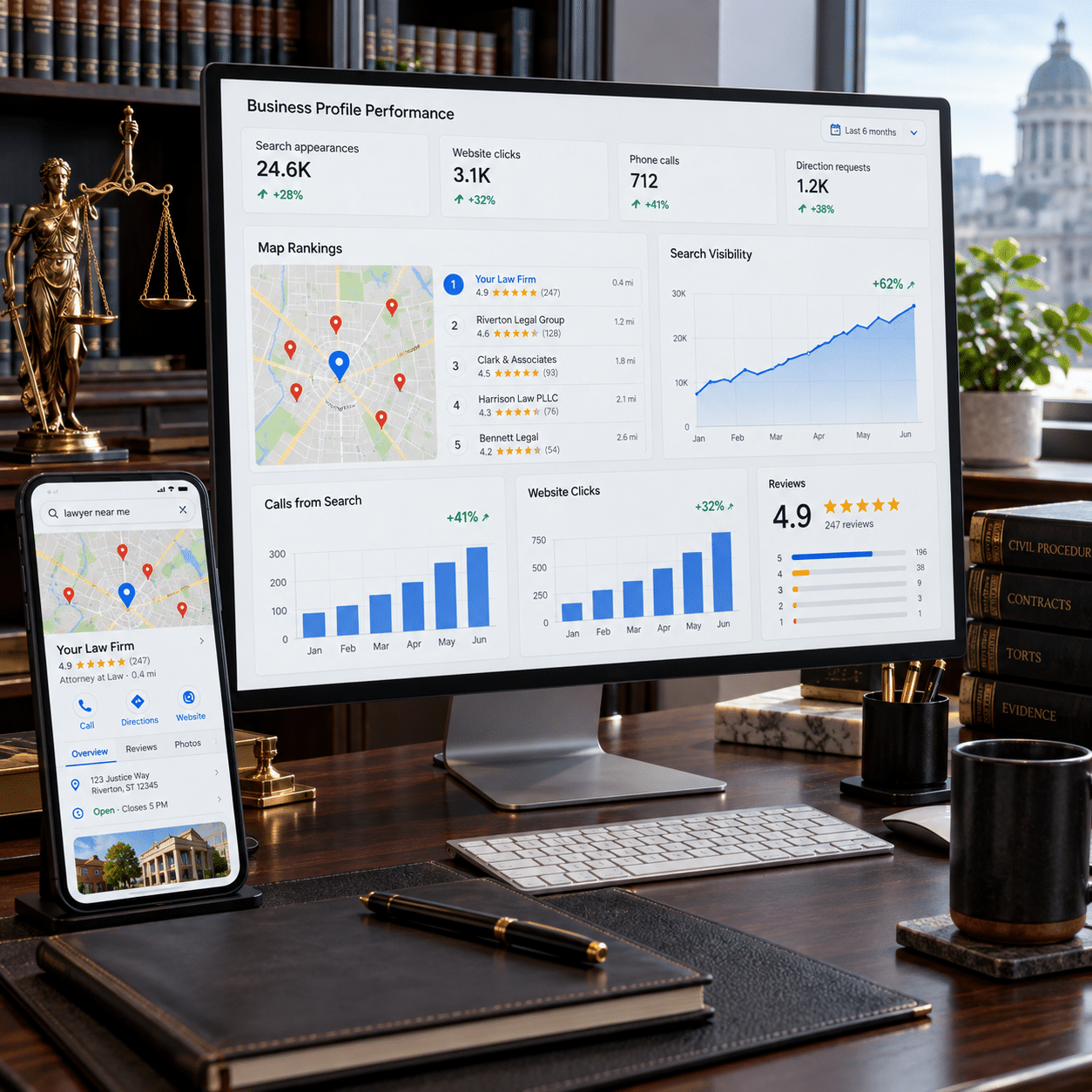
Google Business Profile performance reporting can show website clicks, calls, messages, direction requests, and other interactions. These metrics are useful, but law firms should also connect local SEO activity to intake outcomes.
The firm should track which calls become qualified leads, which leads become consultations, and which consultations become signed cases. Local SEO should be judged by business impact, not visibility alone.
Separate Practice Areas And Markets
A law firm should know which practice areas and locations produce the best cases. A local SEO campaign may generate traffic in several cities, but not all markets produce the same value. Reporting should separate location, practice area, lead quality, consultation rate, and signed-case outcomes.
Better measurement leads to better budget decisions.
Frequently Asked Questions About Local SEO For Law Firms
How Long Does Local SEO Take For A Law Firm?
Local SEO timelines depend on competition, starting authority, website quality, review strength, profile optimization, and local links. Some profile improvements may produce faster gains, but durable local visibility usually requires consistent work over several months.
Do Reviews Affect Law Firm Local SEO?
Reviews can affect both local visibility and conversion. Google states that review count and score can influence local ranking. For law firms, reviews also help prospective clients decide whether to call.
Should A Law Firm Create A Page For Every City It Serves?
Not necessarily. A firm should create local pages only when it can provide unique, useful, accurate content for that market. Thin duplicate city pages are usually weaker than fewer, stronger local pages.
Is Google Business Profile More Important Than The Website?
Both matter. The profile helps the firm appear and convert in Maps and the Local Pack. The website supports organic rankings, authority, attorney credibility, local content, and conversion. Strong local SEO requires both assets working together.
Can A Virtual Office Help A Law Firm Rank Locally?
A law firm should be careful with virtual office strategies. Google Business Profile eligibility depends on real business operations and in-person contact requirements. A firm should not create misleading office listings.
Boost Local SEO Rankings For Your Firm With Forward Lawyer Marketing
Local SEO helps law firms become visible where legal clients are actually searching: in the Local Pack, Google Maps, organic results, legal directories, and AI-assisted discovery. The strongest strategies combine Google Business Profile optimization, local practice pages, ethical reviews, citation consistency, attorney authority, structured data, local links, and intake tracking.
Forward Lawyer Marketing helps law firms build local SEO systems that generate qualified calls and signed cases. If your firm is not appearing in the local results that matter, or if visibility is not turning into consultations, the next step is a professional local SEO audit.
To evaluate your law firm’s local visibility and identify the highest-impact opportunities, contact Forward Lawyer Marketing at (888) 590-9687.
Forward Lawyer Marketing helps law firms evaluate AI visibility across traditional search, Google AI features, ChatGPT search, Perplexity, and other discovery systems. If your firm is unsure whether its website is structured for modern AI-driven search, the next step is a professional LLM visibility audit.
Law Firm AI Visibility Checker
