
Why Topical Authority Matters More Than Keywords For Law Firms
For many years, law firm SEO strategy revolved around a relatively simple formula: identify a high-volume keyword, place that phrase throughout a webpage, build backlinks to the page, and attempt to rank higher than competitors in Google’s search results. This approach produced measurable results during earlier eras of search engine optimization, particularly when Google relied more heavily on direct keyword matching and less on semantic interpretation.
That environment no longer exists.
Modern legal SEO operates within a far more sophisticated ecosystem driven by semantic search, machine learning, entity recognition, contextual relevance, and increasingly, artificial intelligence. Google’s ranking systems are no longer evaluating pages solely based on whether a keyword appears in a title tag or heading. Instead, Google increasingly attempts to determine whether a law firm genuinely demonstrates expertise, depth, trustworthiness, and subject matter authority within a legal niche.
This shift has fundamentally changed how law firms should approach content strategy.
Many firms continue investing heavily in isolated “money pages” targeting phrases such as “Chicago divorce lawyer,” “Dallas personal injury attorney,” or “Milwaukee workers’ compensation attorney” without developing the surrounding topical ecosystem necessary to support those rankings long term. They focus on individual keyword positions while ignoring the broader authority signals Google increasingly uses to evaluate legal websites.
This creates a structural problem.
Google’s modern search systems are designed to identify topic experts rather than merely keyword optimizers. Law firms attempting to rank for highly competitive legal terms without demonstrating broad topical authority often struggle to achieve sustainable visibility, especially within practice areas governed by Google’s “Your Money or Your Life” standards.
The legal industry sits among the most scrutinized categories in all of search because inaccurate legal information can materially affect consumers’ finances, liberty, healthcare access, family relationships, immigration status, employment rights, and other high-stakes outcomes. As a result, Google applies elevated quality thresholds to legal content and increasingly rewards firms capable of demonstrating comprehensive expertise within a practice area.
Where Topical Authority Becomes Critically Important

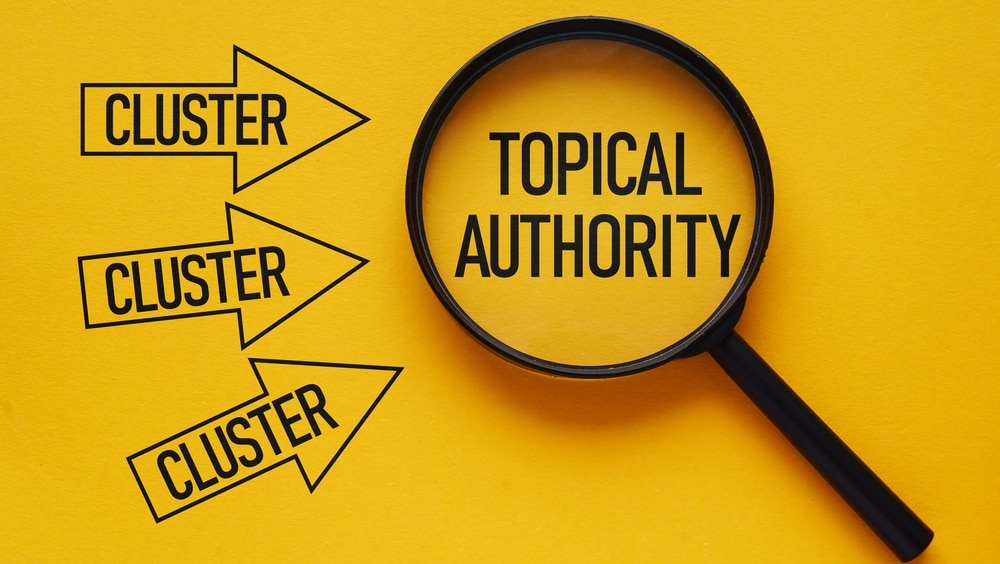
Topical authority refers to a website’s demonstrated depth, breadth, and credibility surrounding a specific subject matter area. In legal marketing, topical authority is achieved when a law firm consistently publishes interconnected, semantically rich content that comprehensively addresses the questions, procedures, concerns, and legal nuances surrounding a practice area.
Rather than attempting to rank a single page for “Illinois child custody lawyer,” a topically authoritative family law website may contain dozens or even hundreds of interconnected resources discussing parenting plans, relocation disputes, child support modifications, non-minor educational expenses, emergency motions, parental alienation claims, mediation procedures, Cook County court practices, visitation disputes, and post-decree enforcement actions.
This broader content ecosystem signals to Google that the firm possesses genuine legal depth rather than superficial keyword targeting.
As search evolves further toward AI-driven retrieval systems and generative search experiences, topical authority is becoming even more important. Search engines increasingly evaluate semantic relationships between concepts, entities, jurisdictions, and expertise signals rather than merely counting keyword occurrences.
For law firms, this means that sustainable organic growth now depends less on “ranking for a phrase” and more on “owning a legal topic.”
The Evolution Of Search In Legal SEO
Why Keyword-Centric SEO Became Less Effective
Early search engines relied heavily on direct keyword matching because their ability to interpret language contextually was limited. If a webpage repeatedly used the phrase “personal injury lawyer,” Google often viewed that page as highly relevant to the topic, regardless of the actual informational quality.
This led to widespread keyword stuffing, shallow location pages, duplicated practice-area content, and manipulative SEO tactics designed primarily to influence ranking algorithms rather than educate users.
Over time, Google recognized that keyword frequency alone was not an effective measure of authority or usefulness, especially in high-risk industries such as law, medicine, and finance.
The company began introducing increasingly sophisticated ranking systems focused on contextual understanding, semantic relationships, and user intent.
Updates involving RankBrain, BERT, Helpful Content systems, neural matching, and entity-based search significantly expanded Google’s ability to interpret meaning rather than merely match words.
As these systems evolved, Google became substantially better at distinguishing between genuinely authoritative legal resources and superficial keyword-targeted pages.
Why Semantic Search Changed Legal Content Strategy
Semantic search refers to Google’s ability to understand the meaning and relationships behind words rather than simply matching exact phrases.
For example, Google now understands that pages discussing “rear-end collision injuries,” “soft tissue damage,” “insurance adjuster tactics,” “Illinois negligence law,” and “medical treatment delays” may all be contextually relevant to a user searching for a personal injury attorney.
This contextual understanding allows Google to evaluate topical comprehensiveness rather than isolated keyword placement.
As a result, law firms publishing broad, interconnected legal content ecosystems often outperform firms relying solely on individual high-volume landing pages.
Google increasingly rewards websites demonstrating mastery over an entire subject area because such websites are statistically more likely to provide trustworthy legal information.
Why Google Gives Higher Privilege to Topic Experts
Google’s search systems increasingly attempt to identify which websites function as authoritative entities within a legal niche.
This matters because legal consumers frequently seek information rather than immediate representation during the early stages of their research journey. Someone considering divorce may initially search for information regarding parenting schedules, asset division, maintenance calculations, or mediation before ever searching for a specific attorney.
Google wants to surface sources capable of answering these broader informational questions accurately and comprehensively.
A law firm publishing only a single “Divorce Lawyer Chicago” page may struggle to compete against a firm operating an extensive family law content ecosystem discussing every stage of Illinois divorce proceedings in detail.
In essence, Google increasingly evaluates whether a law firm demonstrates real subject matter authority rather than merely transactional intent.
Defining Topical Authority For Attorneys
What Topical Authority Actually Means
Topical authority refers to a website’s demonstrated expertise and comprehensiveness surrounding a specific subject matter.
Within legal SEO, topical authority is not created through one article or one practice-area page. It emerges when a law firm develops an interconnected network of educational resources addressing the full spectrum of issues within a legal niche.
For example, a criminal defense firm seeking topical authority in DUI defense should not rely solely on a generic DUI landing page. Instead, the website should comprehensively address topics such as:
Field sobriety testing, breathalyzer reliability, implied consent laws, administrative license hearings, felony DUI enhancements, ignition interlock devices, underage DUI charges, commercial driver DUI consequences, expungement eligibility, and local court procedures.
This broader content depth signals to Google that the website possesses meaningful expertise within the subject area.
Why Topical Authority Differs From Traditional SEO
Traditional SEO often focused narrowly on ranking specific pages for specific keywords.
The distinction is significant.
Ranking for a keyword means achieving visibility for an isolated phrase. Owning a topic means becoming the authoritative source Google trusts across a broad range of semantically related searches.
A law firm may rank temporarily for “Chicago car accident lawyer” through aggressive backlink acquisition or strong domain metrics. However, without broader topical support, those rankings often become unstable over time.
By contrast, a firm demonstrating comprehensive authority across personal injury law tends to generate stronger long-term visibility across hundreds or thousands of related searches simultaneously.
Why Topical Authority Improves AI Search Visibility
As AI-generated search experiences continue expanding, topical authority becomes even more important.
AI retrieval systems increasingly evaluate semantic depth and contextual authority when determining which sources to summarize or cite.
A law firm with extensive, well-structured content discussing every major aspect of Illinois workers’ compensation law is more likely to be surfaced within AI-generated summaries than a firm relying solely on thin service pages.
This is because AI systems prioritize authoritative source ecosystems rather than isolated keyword targets.
The Legal Niche Problem
Why Broad Keywords Alone Fail
Many law firms attempt to compete directly for highly commercial search phrases without developing the supporting topical infrastructure necessary to justify those rankings.
For example, a firm may invest heavily into a “Los Angeles truck accident lawyer” page while failing to publish supporting resources discussing:
Federal trucking regulations, black box evidence, commercial vehicle maintenance records, driver fatigue claims, catastrophic spinal injuries, accident reconstruction, cargo loading violations, and comparative negligence defenses.
This creates an authority gap.
Google increasingly expects websites ranking for competitive legal terms to demonstrate broader expertise surrounding the subject matter itself.
Without topical depth, high-volume keywords become difficult to sustain competitively.
Why Legal SEO Requires Jurisdictional Depth
The legal industry presents additional complexity because laws vary significantly by state and jurisdiction.
A family law firm in Illinois must demonstrate understanding of Illinois statutes, Cook County procedures, local judicial practices, and regional legal nuances. Generic national content often performs poorly because it lacks jurisdictional specificity.
This is especially true within practice areas involving procedural variation such as:
Divorce law, workers’ compensation, criminal defense, estate planning, child custody, landlord-tenant law, probate litigation, and personal injury claims.
Google increasingly rewards geographically relevant expertise because consumers require accurate jurisdiction-specific guidance.
Why Broad Practice Area Pages Are Insufficient
A single broad practice-area page rarely provides enough semantic depth to establish topical authority competitively.
For example, a personal injury page discussing “car accidents” generally cannot compete long term against websites publishing comprehensive ecosystems involving:
Rear-end collisions, distracted driving accidents, trucking accidents, uninsured motorist claims, traumatic brain injuries, wrongful death litigation, motorcycle crashes, intersection collisions, rideshare accidents, insurance bad faith claims, and settlement negotiation procedures.
The broader ecosystem creates stronger semantic relevance and trust signals.
Building Legal Content Clusters

Understanding The Pillar-And-Cluster Model
One of the most effective frameworks for developing topical authority involves the pillar-and-cluster content model.
A pillar page functions as a comprehensive, high-level resource covering a major legal category broadly. Supporting cluster content then explores specific subtopics in substantially greater detail.
For example, a family law pillar page may broadly discuss Illinois divorce law while cluster articles examine narrower issues such as:
Child support modifications, hidden assets during divorce, parenting schedules, non-minor educational expenses, emergency custody motions, mediation procedures, military divorce considerations, and post-decree enforcement actions.
This interconnected architecture strengthens semantic relevance across the entire practice area.
Why Internal Linking Matters
Internal linking plays a major role in topical authority because it helps search engines understand relationships between legal concepts.
Strong internal linking structures distribute authority throughout the content ecosystem while reinforcing semantic associations.
For example, a comprehensive Illinois child custody guide may internally link to supporting pages discussing:
Parenting plans, relocation disputes, emergency motions, child support calculations, and mediation procedures.
This interconnected structure strengthens contextual understanding for both users and search engines.
Why Long-Tail Legal Questions Matter
Long-tail legal searches often reveal high informational intent and provide opportunities to build semantic depth.
Questions such as:
“How long does workers’ compensation last in Wisconsin?”
“What happens if my ex refuses visitation in Illinois?”
“Can I reopen a personal injury claim after settlement?”
“How is maintenance calculated in Cook County?”
may individually generate lower search volume than major commercial keywords, but collectively they create substantial topical coverage.
More importantly, they help establish the law firm as a comprehensive educational resource.
E-E-A-T And Topical Authority

Why E-E-A-T Is Central To Legal SEO
Google’s E-E-A-T framework — Experience, Expertise, Authoritativeness, and Trustworthiness — plays an especially important role within legal search because legal content directly affects consumers’ lives.
Topical authority and E-E-A-T are deeply interconnected.
A website cannot realistically demonstrate expertise within a legal niche without substantial topical depth.
Similarly, broad topical coverage alone is insufficient if the content lacks credibility signals.
Demonstrating Real Legal Expertise
Law firms can strengthen E-E-A-T through several mechanisms.
Detailed attorney biographies help establish professional legitimacy and jurisdictional authority. Published articles discussing procedural strategy, local court practices, and statutory interpretation further reinforce expertise.
Reviews, professional memberships, speaking engagements, media mentions, and legal directory profiles all contribute additional trust signals.
Importantly, Google increasingly evaluates these signals collectively rather than independently.
Why AI Search Intensifies E-E-A-T Importance
AI-generated search systems amplify the risks associated with misinformation.
As a result, AI retrieval systems appear increasingly selective regarding which legal sources they trust.
Law firms demonstrating broad topical authority combined with strong E-E-A-T signals are therefore better positioned for both traditional rankings and AI-generated visibility.
The ROI Of Topical Authority
Why Authority Produces Long-Term Stability
Keyword-focused SEO often creates unstable visibility because rankings depend heavily on isolated page performance.
Topical authority produces broader resilience because the website becomes associated with an entire legal category rather than a single phrase.
This often leads to stronger long-term ranking stability.
Lower Paid Advertising Dependence
Strong topical authority frequently reduces dependence on paid advertising over time.
Firms dominating organic visibility across a legal niche often experience:
Lower effective acquisition costs, broader keyword footprint expansion, stronger branded search growth, and improved lead quality.
As organic authority strengthens, firms may rely less heavily on expensive PPC campaigns for lead generation.
Better Lead Quality And Conversion Rates
Educational authority also improves lead quality.
Consumers researching legal issues extensively before contacting a law firm often develop higher trust levels toward firms that consistently provide useful information.
This can improve consultation quality, conversion rates, and overall client confidence.
Frequently Asked Questions About Topical Authority
How Long Does It Take To Build Topical Authority?
Building meaningful topical authority generally requires sustained effort over many months rather than quick optimization tactics.
Most law firms begin seeing stronger authority signals after consistently publishing comprehensive, interconnected content over six to eighteen months depending on competition level and practice area saturation.
Is Topical Authority More Important Than Backlinks?
Backlinks still matter substantially within legal SEO. However, backlinks alone rarely create sustainable rankings without strong topical depth supporting them.
The strongest legal SEO strategies combine authoritative content ecosystems with high-quality backlink acquisition.
Can Small Law Firms Build Topical Authority?
Absolutely. In many situations, smaller niche-focused firms can outperform larger competitors by developing highly concentrated expertise within a specific legal category or geographic market.
Depth often outperforms breadth.
How Many Articles Does A Law Firm Need?
There is no universal number. The goal is not arbitrary content volume, but comprehensive topic coverage.
A strong family law content ecosystem may eventually include dozens or hundreds of interconnected resources covering procedural, financial, parenting, and jurisdictional topics comprehensively.
Why Does Topical Authority Matter For AI Search?
AI retrieval systems increasingly evaluate semantic depth and source reliability when generating summaries.
Law firms demonstrating broad expertise across a legal niche are more likely to be surfaced, summarized, or cited within AI-generated search experiences.
Does Topical Authority Improve Local SEO?
Yes. Topical depth combined with geographic relevance strengthens local authority signals substantially.
A Chicago divorce firm publishing extensive Illinois-specific family law content often improves both traditional local rankings and broader semantic visibility.
Contact Forward Lawyer Marketing To Build Topical Authority For Your Law Firm
The era of simplistic keyword-centric legal SEO is rapidly disappearing.
Google’s search systems increasingly prioritize semantic authority, contextual expertise, trustworthiness, and comprehensive topical coverage over isolated keyword optimization tactics. For law firms operating within highly competitive YMYL environments, this shift is especially significant.
Modern legal SEO success depends less on “ranking for a phrase” and more on establishing ownership over a legal subject area.
Law firms seeking sustainable growth should therefore move beyond shallow practice-area pages and begin building comprehensive content ecosystems addressing the full spectrum of issues surrounding their legal niches. This means investing in long-form educational resources, jurisdiction-specific guidance, interconnected cluster content, structured internal linking, and strong E-E-A-T reinforcement.
The firms that dominate organic visibility over the next decade will likely be those that function not merely as legal advertisers but as trusted legal knowledge authorities.
If your law firm’s SEO strategy still revolves primarily around isolated keyword targets rather than broader topical authority development, now is the time to reassess your approach.
Audit your existing content ecosystem. Identify topical gaps. Evaluate semantic coverage. Expand your practice-area depth. Strengthen your internal linking architecture. Develop jurisdiction-specific educational resources that demonstrate genuine legal expertise.
If your firm has not yet embraced this approach, now is the time to act. Conduct a comprehensive audit of your content, identify gaps, and begin developing a strategy that prioritizes the Pillar-Cluster SEO strategy. Contact our law firm SEO professionals at 888-590-9687 today to schedule a consultation and take the next step toward dominating your local market.
