
Local SEO Secrets for Law Firms Uncovered

Mastering Law Firm Google Business Profile and Local Search Strategies
Local SEO for law firms focuses on optimizing a firm’s presence in geographically driven search results so attorneys appear for prospective clients in their service areas. This approach centers on the Google Business Profile plus local signals—citations, reviews, localized content, and backlinks—to influence the Local Pack and Maps rankings, driving phone calls, directions, and consult requests.
Law firms that master local search win higher-intent traffic from people searching for “near me” attorneys, courthouse-specific queries, and practice-area + city combinations. This guide explains why local SEO matters for legal practices, provides step-by-step Google Business Profile (GBP) optimization, outlines keyword research strategies, and details citations, backlinks, reviews, and technical tactics to improve multi-location rankings.
What is Local SEO and Why is it Crucial for Law Firms?
Local SEO for law firms is the practice of optimizing online presence so legal practices rank for geographically relevant searches, with Google Business Profile and local signals acting as the primary ranking mechanisms. The mechanism works by aligning NAP consistency, category selection, review signals, and localized content to Google’s local search algorithms, which then prioritize firms in the Local Pack and Maps.
The clear benefit is increased visibility to high-intent searchers seeking legal help nearby, resulting in more calls, direction requests, and consultations that convert into retained clients. Understanding how local intent differs from general SEO is essential because legal searchers often pursue urgent, transactional outcomes; optimizing for local intent shortens the path from search to client engagement. This section explains conversion pathways and ranking factors so firms can prioritize the highest-impact local tasks.
How Does Local SEO Drive Client Acquisition for Attorneys?
Local SEO drives client acquisition by converting local visibility into measurable micro-conversions—GBP views become profile actions, actions become calls or contact form submissions, and those interactions become consultations and retained matters. For example, a well-optimized profile with up-to-date services, clear CTAs, and frequent positive reviews increases the likelihood that a profile view converts to a phone call or booked consultation.
Tracking attribution requires call-tracking numbers, form tracking, and UTM-tagged landing pages to connect local interactions to revenue and caseload metrics. Firms should map the funnel from impression to retention and assign value to each action so optimization efforts target the most profitable touchpoints. This client-acquisition funnel frames subsequent recommendations on GBP completeness, local landing pages, and review generation.
What Are the Key Local Search Ranking Factors for Legal Practices?
Local search ranking factors for legal practices prioritize completeness and trust signals: a verified and fully completed Google Business Profile, consistent NAP across citations, volume and sentiment of reviews, localized on-page content, local backlinks, schema markup, and technical performance on mobile. Each factor contributes differently: GBP completeness and categories influence local relevance, citations and NAP consistency signal trust, and reviews drive both ranking and consumer choice.
Quick wins include verifying the GBP, ensuring category precision, correcting inconsistent NAP entries, and soliciting recent client reviews with follow-up responses. Prioritizing these signals in concert—rather than chasing any single metric—produces durable local visibility and stronger conversion rates for attorney practices.
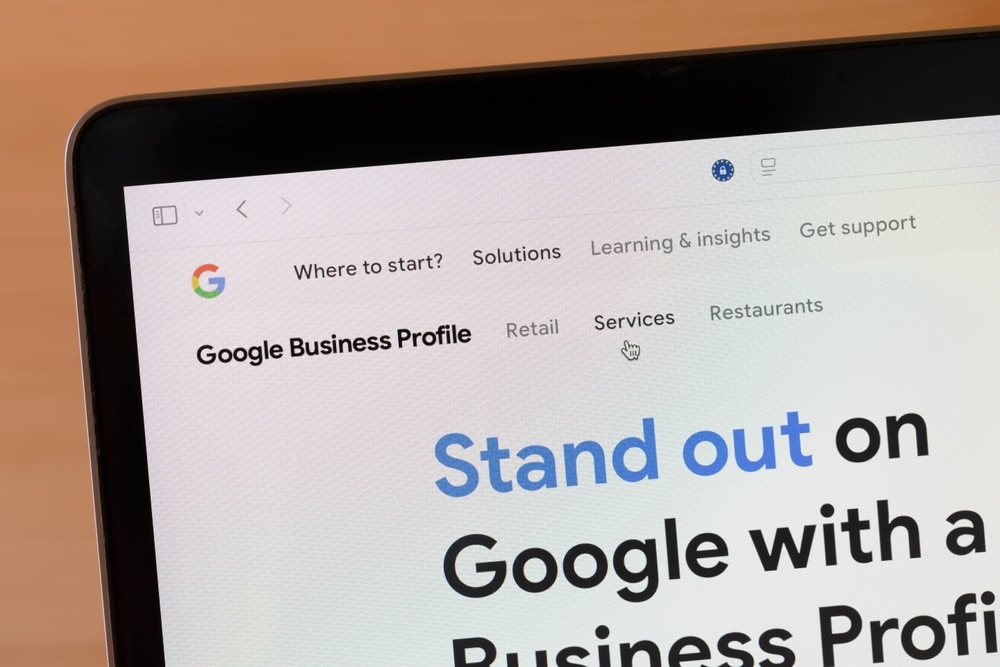
How to Optimize Your Google Business Profile for Lawyers
A lawyer’s Google Business Profile should be a conversion-focused local asset with complete service fields, accurate categories, compelling photos, and consistent contact details to maximize local search relevance and user trust. The mechanism is straightforward: GBP provides structured signals to Google and immediate information to searchers—hours, services, phone, directions, and reviews—so completeness and accuracy directly impact discoverability and actions.
The primary benefit is higher placement in the Local Pack and increased profile interactions that lead to consultations. Below are step-by-step actions lawyers should take to secure immediate GBP wins and ensure the profile supports intake processes and local ranking.
Research further underscores the critical role of local business optimization for search engines in driving organic traffic and achieving advantageous placement in the Local Pack.
Local Business Optimization for Google & Local Pack
- Claim and verify your Google Business Profile following Google’s verification procedures and confirm the firm’s legal name and service area.
- Complete every profile field: primary and secondary categories, services with descriptions, accurate phone number, service areas, business hours, and attributes.
- Add high-quality photos and videos showing the office, team, and branded materials, and publish regular GBP posts for events, FAQs, and recent case results (non-sensitive).
These steps set the foundation for local visibility and move prospects from profile to contact. Firms that complete these items see better profile action rates and clearer attribution of local queries to intake channels. The next subsections dive deeper into verification, images, categories, and posting cadence to maximize results.
What Steps Ensure a Complete and Verified Google Business Profile?
To ensure a complete and verified Google Business Profile, follow a checklist that includes claiming the listing, completing the NAP exactly as used on the website, selecting precise primary and supporting categories, and adding service descriptions that reflect transactional intent. Verification typically requires following Google’s verification flow—postcard, phone, or email, where available—and troubleshooting common issues like duplicate listings or mismatched addresses.
Image guidelines matter: upload high-resolution photos sized for profile display, include interior/exterior shots and team photos, and add image captions that incorporate location and practice area keywords where appropriate. Completing these fields and resolving verification problems reduces friction in Google’s indexing and improves trust signals to prospective clients.
How to Use Categories, Photos, and Posts to Enhance Local Visibility
Selecting precise primary and secondary categories helps Google understand a law firm’s core services, while photos and posts improve engagement metrics that feed back into local relevance signals. Choose a single, highly specific primary category (e.g., Personal Injury Lawyer) and add relevant secondary categories for specialties; avoid generic categories that dilute relevance.
Post cadence matters—publish short posts weekly with content types such as client-facing FAQs, event notices, or service spotlights, and include clear CTAs like “Call for a consultation” or “Request a case review.” For photos and videos, use descriptive filenames and alt-text that mention the city or neighborhood to reinforce local relevancy. Consistent content and media on GBP also create freshness signals that support ranking and increase click-to-call conversions.
After clarifying GBP tactics, many firms benefit from external support to implement and maintain these optimizations. Forward Lawyer Marketing offers consultative local SEO services tailored to law firms, pairing an in-house marketing manager model with strategic account oversight and measurable KPIs.
Their approach emphasizes customized GBP workflows, category selection, and content cadence to maximize local visibility while preserving firm brand control and attorney oversight. Firms seeking a practical audit and prioritized action plan can contact Forward Lawyer Marketing at (888) 590-9687 to discuss a local profile review and implementation roadmap.

Which Local Keyword Research Strategies Boost Law Firm SEO?
Local keyword research for law firms pairs practice-area intent with geographic modifiers to target searchers actively seeking legal help, and the process focuses on transactional and navigational queries that map to intake pages. The mechanism involves combining seed terms, courthouse and neighborhood names, and “near me” or intent modifiers to capture micro-moments of demand.
The benefit is a prioritized list of keywords that align to landing pages, GBP services, and FAQ content to drive qualified conversions. Use the table below to compare keyword intent and approximate volume examples for common practice-area + city combinations to help prioritize content and GBP focus.
| Keyword Phrase | Intent | Estimated Monthly Volume (Approx.) |
|---|---|---|
| personal injury lawyer [city] | Transactional (hire/consult) | 500–2,000 |
| divorce attorney [neighborhood] | Transactional (hire/consult) | 150–800 |
| criminal defense lawyer near me | Navigational / Transactional | 300–1,500 |
| estate planning attorney [county courthouse] | Informational → Transactional | 80–400 |
This comparison helps law firms prioritize content where intent and volume align with revenue potential. By mapping high-intent phrases to dedicated landing pages and GBP service descriptions, firms convert local search demand into measurable consultations.
How to Identify Location-Specific Keywords for Legal Services
Identify location-specific keywords by combining practice-area seeds with city, neighborhood, courthouse, and “near me” modifiers and by analyzing competitor landing pages and courthouse search terms used by clients.
Start with core practice seeds (e.g., “personal injury lawyer,” “DUI attorney”), append local modifiers like city names, neighborhoods, or courthouse references, and expand with intent modifiers such as “free consultation,” “no win no fee,” or “same-day consult” where permissible.
Use competitor scraping to spot phrase patterns, review common search queries in GBP insights, and mine client intake forms for natural language used by callers. Map each keyword to a page or GBP service, so search intent aligns with a clear conversion pathway and reduces content cannibalization.
What Tools Help Master Local Keyword Research for Attorneys?
Effective local keyword research combines general SEO platforms with local-focused tools and Google-native signals to validate intent and volume at the city level. Use Google Keyword Planner for broad volume context, refine with SEMrush or Ahrefs for competitive insights, and employ BrightLocal or other local rank trackers to monitor city-level performance.
Supplement these with Google Trends for seasonality and Search Console for organic queries that already drive traffic to your site. Combining multiple tools produces robust, validated keyword lists, and mapping findings to GBP and landing pages ensures tight alignment between searcher intent and the firm’s intake process.
How to Build Local Citations, Backlinks, and Manage Online Reviews for Law Firms
Off-page local authority combines consistent citations, strategic local backlinks, and a reproducible review-generation workflow to increase trust and local search prominence for law firms. The mechanism centers on demonstrating to Google that a firm is reputable and relevant in a specific geography through third-party references, local editorial links, and ongoing review velocity.
The benefit is improved local pack rankings and a higher conversion likelihood from searchers who rely on reviews and local signals when choosing an attorney. Below are priority citation sources and practical backlink and review tactics to scale local authority.
Further research emphasizes that consistent NAP data, local citations, and a focused backlink strategy are fundamental local optimization tactics that significantly influence search visibility.
Different directories and local listings serve different purposes—some offer high authority and citation value, others provide targeted legal audiences. The table below lists recommended legal and local directories with quick submission notes to guide prioritization.
| Directory / Listing | Authority / Use-case | Submission Notes / Cost |
|---|---|---|
| National legal directories | High-authority, legal-specific referrals | Verify profiles, complete practice areas; some offer paid upgrades |
| Local chamber / city directories | Local relevance and community signals | Claim free listings and ensure NAP consistency |
| Local business directories (city portals) | Geographic signals; often low-cost | Use consistent NAP and add detailed service descriptions |
| Court-related / bar association pages | Trust and topical relevance | Apply for profiles where permitted and keep credentials accurate |
Claiming these listings in priority order builds a reliable citation footprint. Regularly auditing and harmonizing NAP across all entries prevents dilution of local signals and supports stable Local Pack performance.
What Are the Best Legal Directories for Local Citations?
The best legal directories blend topical relevance with authority: national legal directories, state bar directories, local chamber listings, and high-authority business aggregators. Action priority is to claim and verify national legal directories and bar association listings first, then secure local chamber and city portals, and finally optimize secondary business listings.
Ensure each profile uses the exact NAP string, adds service descriptions and categories, and includes localized content where fields allow. Submissions should be tracked via a central spreadsheet or citation management tool to prevent duplicates and to schedule periodic audits. This structured approach minimizes inconsistencies that harm local rankings.
How Do Online Reviews Impact Local SEO and Client Trust?
Online reviews influence both ranking signals and consumer trust: volume, recency, and sentiment of reviews contribute to local ranking algorithms while star ratings and reviewer narratives shape prospect decisions. Generating a steady flow of authentic reviews from satisfied clients improves local visibility and amplifies conversion rates when profiles show recent positive feedback.
Response strategy matters—respond promptly and professionally to both positive and negative reviews, demonstrate empathy, and offer offline resolution where required to protect client confidentiality. Sample response templates and consistent follow-up requests integrated into intake workflows help scale review velocity while maintaining ethical client handling and privacy.
After building citations and review workflows, many firms choose to outsource execution to ensure consistency and scale. Forward Lawyer Marketing has experience securing local citations and managing reputation programs for law firms and documents results through case studies and testimonials available on their site. Their teams focus on NAP consistency, targeted directory acquisition, and reputation management processes that fit firm compliance needs and intake systems.
What Advanced Local SEO Tactics Improve Multi-Location Law Firm Rankings?
Advanced local SEO for multi-location firms requires architectural decisions—location landing pages, canonical strategies, subfolder structures, schema, and geo-targeting—that collectively preserve relevance without creating duplicate content or thin pages.
The mechanism is to create distinct, locally optimized pages that serve unique user intent while signaling to search engines each office’s service area and specialization through structured data and internal linking. The benefit is improved local pack visibility for each office while maintaining centralized domain authority and conversion tracking.
How to Implement Schema Markup and Technical SEO for Lawyers
Implement LocalBusiness, Attorney, Service, and FAQPage schema markup on location pages and service landing pages to provide structured context to search engines, enhancing indexation and rich result eligibility. Include properties such as legalName, telephone, serviceArea, and areaServed where applicable, and validate markup with structured data testing tools.
Address technical priorities—mobile responsiveness, site speed, and Core Web Vitals—because local search increasingly rewards fast, mobile-first experiences. Prioritize schema on location pages, contact pages, and high-converting service pages to maximize crawl efficiency and structured-data signals that support local ranking and snippet eligibility.

What Are Effective Voice Search and Mobile Optimization Strategies?
Optimizing for voice and mobile means crafting conversational, Q&A-style content that matches natural language queries and placing click-to-call buttons and prominent CTAs for immediate contact. Voice search queries often use question phrasing and include “near me” or location in speech, so using FAQ sections, short answers, and schema can improve voice response selection.
Mobile UX should prioritize one-tap actions, clear contact prominence, and fast-loading local landing pages to reduce drop-off. Test voice performance with common client questions, analyze mobile engagement metrics, and iterate content to reflect the short, conversational answers favored by voice assistants.
How to Measure Success and Stay Ahead in Law Firm Local SEO
Measuring local SEO success focuses on Local Pack rankings, GBP interactions, calls, form submissions, and conversion-to-retainer rates, tracked with a mix of platform dashboards and call/form attribution. The mechanism is to combine quantitative KPIs with qualitative intake feedback to refine local strategies and prioritize high-ROI tasks.
Tracking these KPIs with appropriate tools enables firms to replicate what works and stop tactics that do not drive measurable caseload growth. Use the EAV-style KPI table below to map metrics to tools, recommended frequency, and target benchmarks to operationalize measurement.
| KPI | What it Measures | Tool / Frequency / Target Benchmark |
|---|---|---|
| Local Pack Ranking | Visibility for priority keywords | Local rank tracker / Weekly / Top 3 for primary city keywords |
| GBP Actions (calls, direction requests) | Profile-driven engagement | GBP Insights + call tracking / Monthly / Month-over-month growth |
| Phone Calls → Consultations | Intake conversion quality | Call tracking + CRM / Monthly / 20–40% consultation rate |
| Form Submissions → Retainers | Online conversions | Analytics + CRM / Monthly / Improvement goal per campaign |
These metrics create a clear monitoring cadence and link local optimization work to business outcomes. Regular reporting and benchmarks allow firms to iterate on GBP content, landing pages, and review programs with measurable goals.
Which KPIs and Tools Track Local SEO Performance for Attorneys?
Core KPIs include Local Pack ranking position, GBP impressions and actions, call volume and quality, form submission conversion rates, and citation accuracy. Tools that support this tracking include native dashboards like GBP Insights and Search Console for query impressions, analytics platforms for on-site behavior, local rank trackers for neighborhood-level ranking, and call-tracking systems for attribution.
Establish a monitoring frequency—weekly for rank checks, monthly for engagement and conversion reviews, and quarterly for strategy assessment—and assign owners for each metric to ensure accountability. This KPI-to-tool mapping enables continuous improvement and transparent reporting to firm leadership.
How Often Should Law Firms Audit and Update Their Local SEO Content?
Law firms should adopt a structured audit cadence: monthly checks for GBP status and reviews, quarterly audits for content, technical health, and backlink profiles, and an annual strategic review for competitive shifts and new service expansions.
Monthly tasks include responding to reviews, verifying NAP consistency, and refreshing GBP posts; quarterly tasks should cover content gap analyses, schema validation, and backlink opportunity assessments; annual reviews evaluate territory expansion, multi-location architecture, and major technical upgrades.
Assign routine owners—an in-house marketing point person for day-to-day items and an external agency partner for quarterly technical audits—to maintain momentum and ensure continuous local search improvement.
Contact Law Firm Local SEO Professionals Today
For firms ready to translate measurement into measurable growth in caseload and revenue, partnering with a specialized agency can accelerate implementation. Forward Lawyer Marketing offers consultative local SEO audits and managed programs that align GBP optimization, citation building, and performance measurement to revenue goals.
Our team combines an in-house marketing manager approach with experienced leadership, including an SEO Director with two decades of domain expertise, and Google-certified PPC professionals to integrate paid and organic local strategies.
To begin a prioritized local SEO audit or discuss measurable outcomes for your firm, contact Forward Lawyer Marketing by phone at (888) 590-9687 to arrange an audit and implementation plan.
