
Local SEO for Solo Attorneys vs. Large Firms

Why Local SEO Has Become a Defining Growth Channel for Law Firms
Local SEO is no longer a secondary marketing tactic for law firms in the United States. It has become one of the primary ways prospective clients discover, evaluate, and contact legal counsel. When someone searches for a “personal injury lawyer near me,” “divorce attorney in Chicago,” or “criminal defense lawyer in Dallas,” Google commonly responds with a tightly compressed set of high-visibility assets: the Local Pack, Google Business Profile listings, Local Services Ads, and increasingly, AI-assisted summaries layered into the results page. That means visibility is concentrated. A small number of firms absorb the overwhelming majority of attention.
This has created a highly asymmetric market. A firm that appears in the top local positions is not simply “doing slightly better” than a competitor ranking lower. In many markets, it is capturing the trust, the calls, the direction requests, the profile views, and the first consultation opportunities that would otherwise be distributed across a broader set of competitors. Local SEO has therefore become central to law firm business development, especially for practice areas where a prospective client tends to hire quickly and close to home.
At the same time, local SEO is not experienced equally across all firm models. A solo attorney and a large, multi-location law firm do not compete under identical conditions. They do not have the same budget, the same operational complexity, the same brand recognition, or the same local footprint. The solo attorney often wins by being geographically precise, operationally nimble, and deeply embedded in a neighborhood or community. The large firm often wins by leveraging scale, stronger backlink authority, greater review volume, and sophisticated internal marketing systems. Each has strategic advantages. Each has structural disadvantages.
Understanding those differences is critical. The legal market is too competitive for generic advice. A solo criminal defense attorney in one Cook County suburb should not build local SEO the same way a regional family law firm with six offices would. The tactics, priorities, and technical execution have to reflect the firm’s size, service radius, intake capacity, and business model.
Why Resources Change Strategy More Than Most Firms Realize
Solo attorneys usually compete through concentration, not scale
Solo attorneys generally operate with leaner marketing budgets, which means they do not have the luxury of broad experimentation. They cannot afford to spend aggressively on multiple acquisition channels while waiting to see what works. In practice, this often forces a level of discipline that becomes a competitive advantage.
A solo attorney tends to build local SEO around a narrower service area and a smaller number of commercial priorities. Instead of trying to dominate an entire metro area at once, the solo may focus on a few adjacent neighborhoods, one county, or one courthouse ecosystem. That focus changes everything. It affects the keyword map, the Google Business Profile optimization strategy, the review acquisition workflow, and the type of content published on the website. It also improves internal alignment, because the solo attorney usually knows exactly which matters they want more of and from where.
This narrower target often leads to better marketing efficiency. The website can be structured around a smaller set of practice area pages with strong local intent. The Google Business Profile can be optimized with a sharper service focus. Review requests can be personally managed. Community partnerships can be cultivated in a way that generates local brand familiarity rather than just abstract digital impressions. These are not small advantages. In local search, precision often beats scale when the market is crowded.
Large firms have more financial capacity, but complexity often slows performance
Large firms have the opposite problem. They can invest more, but they are harder to organize. A large firm may have a sophisticated marketing department, outside vendors, strong creative resources, paid media support, and the budget to publish at scale. In theory, that should create a dominant advantage. Sometimes it does. But in local SEO, scale without local specificity can underperform.
A multi-location firm often has to coordinate branding, compliance review, profile management, intake routing, attorney bios, review generation, and location-page strategy across several offices and practice groups. This makes execution slower. It also increases the risk of duplication, inconsistent NAP data, weak location differentiation, and overly centralized content that does not feel genuinely local.
The larger the firm becomes, the more likely it is to build systems that are efficient internally but generic externally. A city page that sounds identical to twenty other city pages may satisfy a template requirement, but it rarely performs like content that reflects the actual legal, geographic, and commercial nuances of the market. In local SEO, operational scale is only useful when it is paired with local authenticity.

Why Google’s Local Pack Behaves Differently for Single-Office and Multi-Office Firms
Google Still Anchors Local Search Results in Relevance, Distance, and Prominence
Google’s own business guidance makes clear that local ranking is driven primarily by relevance, distance, and prominence. Relevance refers to how well a business profile matches the user’s query. Distance reflects how close the business is to the searcher or the area specified in the search. Prominence relates to how well-known or authoritative the business appears online.
This matters because many law firms still overemphasize one of those pillars while neglecting the others. Some focus too heavily on citations and backlinks while ignoring category selection and services in their Google Business Profile. Others produce localized content but fail to generate enough reviews and authority signals to be prominent. Effective local SEO requires all three.
Solo Attorneys Often Benefit From Tighter Proximity Signals
A solo attorney with one office often has a more coherent local footprint. The office address, the website’s target geography, the citation ecosystem, and the review base all point to the same location. That creates a cleaner local signal. If the attorney also practices within a defined radius and receives most leads from nearby searchers, the proximity factor can become a major advantage.
In practical terms, this means a solo attorney may rank strongly in a smaller radius around the office and convert well within that zone. Google Business Profile community guidance repeatedly emphasizes that local visibility is tied to relevance and proximity, and businesses often rank best within the immediate radius of their verified address.
A solo attorney should build a strategy around that reality rather than fighting it. Instead of trying to appear everywhere, the solo attorney can dominate a smaller area through stronger profile completeness, better localized landing pages, and more concentrated review velocity.
Large Firms Gain Geographic Reach, but Can Weaken Local Relevance if Profiles are Poorly Differentiated
Large firms with multiple offices gain one obvious advantage: they can establish physical relevance in more than one market. If each office has a verified Google Business Profile and a legitimate business presence, the firm can compete in multiple local ecosystems at once. That can be powerful.
But this advantage only works if each office is treated as a real local entity rather than a duplicate extension of the main brand. If the Chicago office, Naperville office, and Schaumburg office all point to thin pages with nearly identical language, Google receives weaker relevance signals. The same problem occurs when reviews mention the firm generally but not the specific office, or when service descriptions are copied across locations without meaningful adaptation.
Large firms, therefore, need local differentiation at scale. Every office needs unique content, strong on-page local signals, office-level photos, office-level reviews where possible, and a real connection between the listing and the landing page experience.

Why Solo Attorneys Often Win Hyperlocal Relevance and Large Firms Win Breadth
Solo Attorneys Should Build Fewer Pages, but Make Them Deeper and More Local
One of the biggest mistakes solo attorneys make is trying to imitate the publishing volume of larger firms. That usually leads to shallow content, underdeveloped location pages, and blog posts that exist for search engines rather than real users. A solo attorney generally performs better by publishing fewer assets, each with more depth, stronger local intent, and clearer conversion pathways.
That means practice area pages should not be generic summaries. A family law page should explain how matters move through the local court system, what temporary relief may look like, how parenting disputes are commonly handled, and what practical issues local clients often face. A DUI page should speak to local enforcement patterns, local court procedures, license implications, and the realities of time-sensitive intake.
For solo lawyers, local SEO content works best when it feels inseparable from the geography being targeted. Community news, neighborhood legal trends, courthouse logistics, and region-specific FAQs are often more useful than generic “what is” articles that hundreds of firms publish.
Large Law Firms Should Use Content Architecture to Turn Scale into Authority
Large firms can and should use scale to build broader topical authority. They are usually better positioned to create structured content clusters that connect practice area pages, FAQs, city pages, attorney bios, and supporting articles. When this is done well, it creates strong semantic relevance and improves both organic and local search visibility.
But large firms need to avoid turning scale into sameness. Their best local SEO content is usually built in layers. The first layer establishes the core practice area. The second layer targets city- or county-level intent. The third layer addresses supporting questions, local procedures, and legal scenarios. The fourth layer strengthens internal linking and entity consistency across attorney profiles, office pages, and service pages.
This architecture allows a large firm to compete for broad queries and localized queries at the same time. It also helps search engines better understand the relationship between locations, attorneys, and service lines.
Backlink Profiles: Local Sponsorships vs Enterprise Authority
Solo Attorneys Often Benefit More From Local Trust Links Than National Mentions
Solo attorneys do not need to chase every national backlink opportunity to build effective local SEO momentum. In many cases, links from locally trusted organizations can provide more direct value. Sponsorship links, chamber of commerce mentions, local nonprofit partnerships, neighborhood business associations, school or civic event pages, and local media coverage all help reinforce geographic relevance.
These links often do two things at once. First, they provide a local authority signal that supports prominence. Second, they expose the attorney’s name to the same community that is likely to generate referrals and reviews. That dual value is one reason community-based link acquisition is often underappreciated in legal SEO.
Large Firms Should Combine Digital PR with Local Market Authority Building
Large firms usually have better access to digital PR, legal media, and broader authority-building campaigns. Features in high-authority publications can strengthen the domain overall. But for local SEO, those campaigns should be balanced with market-level trust building.
A large firm that only earns links from national publications may still underperform in local pack rankings if its local signals are weak. To compensate, large firms should build city-level relevance through local sponsorships, office-specific community engagement, and market-level partnerships that reinforce the legitimacy of each location.
Reviews and Reputation: Personalized Journeys vs High-Volume Systems
Solo Attorneys Usually Have an Advantage in Review Authenticity
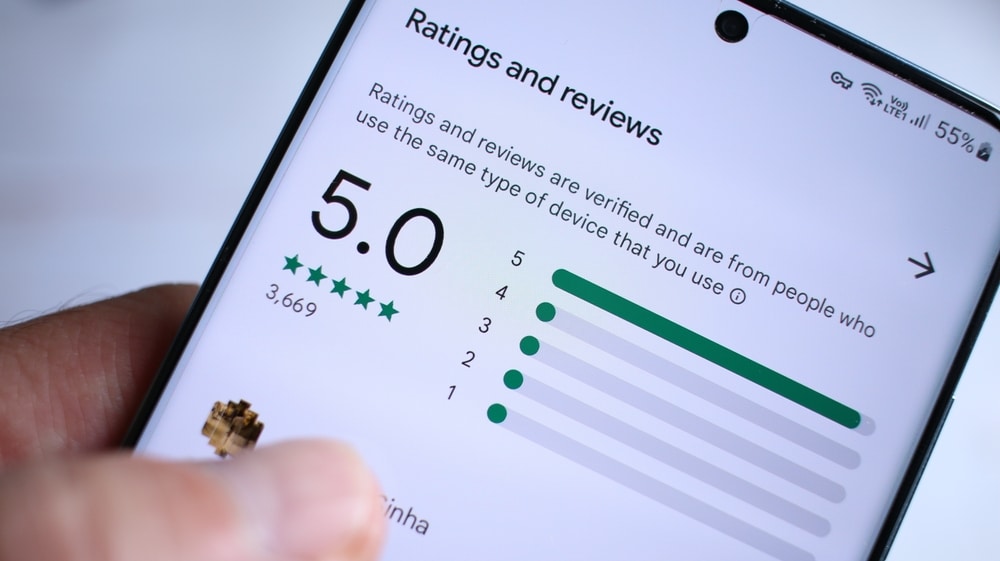
Reviews are central to local SEO because they influence both user behavior and local prominence. Google does not publish a strict formula for how reviews affect rankings, but practical experience and profile performance strongly suggest that review quantity, recency, relevance, and sentiment all matter.
Solo attorneys often benefit from a more personal client journey, which can produce richer reviews. A client who worked directly with the attorney from intake through resolution is often able to describe the experience in detail. Those detailed reviews can strengthen trust and help future prospects self-qualify.
The challenge for solos is not authenticity. It is consistency. Many solo attorneys simply do not ask often enough. The best performers build review requests into the end of the matter lifecycle so that positive outcomes naturally lead to profile growth.
Large Law Firms Must Operationalize Review Generation Without Sounding Scripted
Large firms often have more clients and, therefore, more opportunities to generate reviews. But they also face a scale problem: if review requests are too generic, the resulting feedback can sound repetitive and impersonal. That weakens persuasive value.
The solution is to systematize the request process while preserving specificity. Office-specific requests, attorney-specific mentions where allowed, and timing based on client satisfaction milestones can improve both review volume and quality. A large firm that combines operational discipline with human follow-through can create a powerful review engine.
Technical SEO: The Simplicity Advantage for Solos and the Schema Challenge for Large Firms
Solo attorneys usually have fewer technical failure points
Solo attorney websites are often smaller, simpler, and easier to maintain. That makes technical SEO easier to control. There are fewer location pages to manage, fewer attorneys to mark up, fewer duplicate content risks, and fewer internal linking complications.
This simplicity can be a real advantage if it is used well. A solo site can implement clean schema markup for the firm, attorney, office, FAQ content, and service pages without the overhead of enterprise coordination. It can also maintain faster turnaround on local landing page improvements and GBP landing page alignment.
Large firms need technical rigor to avoid local signal dilution
Large firms face a more demanding technical SEO environment. Multiple practitioners, offices, service pages, and profile types create a larger surface area for errors. Schema implementation becomes more complex. Internal linking must be intentional. Canonical issues, duplicate location page structures, inconsistent attorney data, and disconnected GBP landing pages can all undermine local SEO.
This is where process matters. Large firms need structured QA, centralized citation governance, and careful office-page architecture. They also need to track traffic and conversions from GBP and LSAs using UTM-tagged links so office-level ROI can be measured accurately.
Local Services Ads: Different Strategic Roles for Small and Large Firms
Google states that Local Services Ads help businesses receive leads directly through phone calls and messages, and that advertisers in Local Services must maintain a public, verified Google Business Profile.
For solo attorneys, LSAs can be a force multiplier when used selectively. Because budgets are tighter, solos should usually run LSAs only in their highest-value service categories and within a geographic area they can serve efficiently. The goal is to avoid waste and ensure that every lead has a realistic chance of becoming a retained matter.
For large firms, LSAs often function as a top-of-page dominance play. They can sit alongside strong organic and Local Pack visibility and create layered brand reinforcement. But larger firms must be careful not to assume that paid prominence can compensate for weak organic local signals. LSAs work best when they supplement a strong underlying local SEO foundation.

The Core Strategic Differences Between Solo Lawyers and Large Law Firms
A solo attorney usually wins local SEO by being more specific, more local, and more operationally disciplined. The solo’s advantages are proximity, authenticity, localized content, and direct client review relationships. The solo’s risks are underinvestment, inconsistency, and an overreliance on one or two channels.
A large firm usually wins by combining authority, process, and geographic coverage. The large firm’s advantages are budget, review volume, stronger domain-level signals, and greater publishing capacity. The large firm’s risks are generic content, weak local differentiation, citation inconsistency across offices, and slow execution caused by internal complexity.
Neither model is inherently superior. The firms that win are the ones that align strategy with structure.
Frequently Asked Questions About Local SEO for Law Firms
Does Google Business Profile matter more for solo attorneys than for large firms?
Google Business Profile is critical for both, but it often matters even more for solo attorneys because it is frequently their most efficient local acquisition asset. A solo attorney with a well-optimized profile, strong reviews, complete services, quality photos, and a relevant landing page can outperform larger competitors in a tight geographic radius. For large firms, GBP remains essential, but performance depends more heavily on whether each office is individually optimized and sufficiently differentiated.
Can a solo attorney outrank a large firm in the Local Pack?
Yes. In many markets, a solo attorney can outrank a large firm when the solo has stronger proximity, more relevant profile signals, better local review sentiment, and content that is more tightly aligned with the local query. Large firms often have stronger domain-level authority, but local pack visibility is not governed by domain authority alone. It is strongly influenced by the interaction of relevance, distance, and prominence.
How important is NAP consistency for law firm local SEO?
NAP consistency remains highly important because it supports trust, entity clarity, and citation reliability. If a law firm’s name, address, or phone number varies across its website, legal directories, data aggregators, and local citations, those inconsistencies can weaken local trust signals. For multi-location firms, this becomes even more important because each office must maintain its own consistent citation footprint without conflicting with the others.
Should solo attorneys focus more on local content or backlinks?
In most cases, solo attorneys should begin with local content, Google Business Profile optimization, citation consistency, and review generation before investing heavily in broader backlink campaigns. A solo attorney usually gets stronger short- to medium-term local SEO returns by becoming the most relevant and trustworthy result in a defined service area. Backlinks still matter, but local relevance and profile strength often move the needle faster.
Are Local Service Ads necessary if a law firm already ranks well organically?
Not always, but they can be highly valuable. For solo attorneys, LSAs may be useful when they are tightly controlled and focused on matters with strong economics. For large firms, LSAs often help reinforce visibility and capture incremental demand at the top of the page. They should be viewed as complementary to local SEO, not a substitute for it. Google’s own guidance confirms that LSAs are built to deliver direct leads through calls and messages, making them particularly useful where intake responsiveness is strong.
How long does local SEO usually take for a law firm?
There is no universal timeline because outcomes depend on competition, practice area, geography, existing authority, and execution quality. However, most law firms should expect local SEO to be cumulative rather than instantaneous. Google Business Profile improvements, review growth, citation cleanup, content development, and local link acquisition often begin to produce visible gains within a few months, but durable results generally require sustained effort over a longer horizon.
What is the biggest local SEO mistake large firms make?
One of the most common mistakes is assuming that brand size guarantees local relevance. Large firms often invest heavily in websites and content but underinvest in office-level optimization. When local profiles, office pages, service descriptions, review acquisition, and citation management are too generic, the firm’s size becomes less helpful than expected. In local SEO, a firm must still prove that each office is the best local answer for the user.
Contact Forward Lawyer Marketing To Discuss Local SEO
Local SEO is one of the most consequential marketing disciplines in the U.S. legal market because it sits so close to client intent. People searching for legal services are often looking for immediate, location-specific help. The firms that appear at the top of local results are therefore positioned not just for traffic, but for retained business.
Solo attorneys and large firms can both win, but they do so through different strengths. The solo attorney should lean into geographic precision, community trust, and a tightly controlled marketing system. The large firm should leverage scale while resisting the temptation to standardize away local relevance. In both cases, the goal is the same: build a presence that signals relevance, distance alignment, and prominence more effectively than competitors.
If your firm is not where it should be in local search, the next step is not guesswork. It is an audit. Review your Google Business Profile setup, location-page strategy, review generation process, citation consistency, local backlink profile, and conversion tracking. Identify where your current structure is helping you and where it is silently suppressing visibility.
A strong local SEO strategy for law firms is rarely accidental. It is the result of accurate technical setup, sustained reputation building, disciplined content development, and a clear understanding of how local search actually works. If you want to increase your visibility in the Local Pack, improve your Google Business Profile performance, strengthen your local rankings, and generate more qualified legal leads, start by auditing what already exists and fixing the gaps with intent.
Contact the law firm local SEO professionals of Forward Lawyer Marketing at (888) 590-9687 today to schedule a consultation and take the next step toward dominating your local market.
