
How To Lower Cost Per Lead For Attorneys
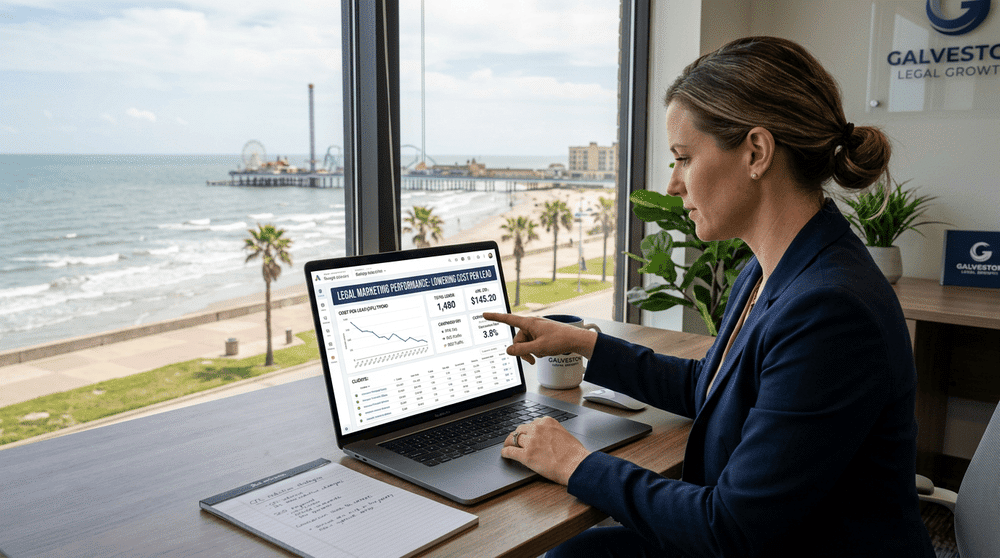
Cost Per Lead, commonly referred to as CPL, has become one of the defining financial metrics in modern law firm marketing. Across the legal industry, firms are facing rapidly increasing advertising competition, higher consumer acquisition costs, more aggressive digital bidding environments, and growing pressure to produce measurable return on investment from every marketing dollar spent. In highly competitive practice areas such as personal injury, criminal defense, family law, workers’ compensation, mass tort litigation, and immigration law, lead acquisition costs have risen dramatically over the last several years, particularly in major metropolitan markets.
Many law firm owners mistakenly assume that rising CPL is simply the unavoidable consequence of digital advertising inflation. While increased competition certainly contributes to higher lead costs, the reality is significantly more nuanced. In many situations, law firms are unknowingly inflating their own acquisition expenses because of operational inefficiencies, weak intake systems, poor targeting, ineffective landing pages, inconsistent follow-up procedures, inadequate conversion optimization, and fragmented marketing attribution.
This distinction is critically important because lowering Cost Per Lead is not achieved merely by reducing advertising spend. In fact, aggressively cutting advertising budgets without improving operational efficiency frequently weakens overall lead volume while doing little to improve profitability. Sustainable CPL reduction requires a sophisticated understanding of the entire legal client acquisition ecosystem.
The Law Firm Marketing Operational Funnel
Modern law firm marketing must now be viewed as a complete operational funnel rather than a collection of isolated advertising tactics. A prospective client’s journey no longer begins and ends with a Google search. Potential clients may discover a firm through organic search, interact with Local Services Ads, review attorney profiles, read Google reviews, visit social media accounts, compare competing firms, engage with AI-generated search summaries, and contact multiple offices simultaneously before making a hiring decision. Every stage of this process influences lead acquisition economics.
The law firms achieving the strongest long-term growth are increasingly those that understand the relationship between advertising efficiency, conversion optimization, intake management, and operational analytics. These firms recognize that lowering CPL is not merely about generating cheaper leads. It is about building a more intelligent and efficient acquisition system capable of converting visibility into profitable client relationships.
Understanding Cost Per Lead In The Legal Industry
Why Legal CPL Continues To Rise Across The United States
The legal industry operates within one of the most competitive digital advertising environments in the American economy. This is particularly true in practice areas where individual cases may generate substantial contingency fees or long-term billing opportunities. Personal injury law, mass tort litigation, catastrophic injury claims, medical malpractice, criminal defense, and high-asset divorce litigation all involve significant commercial value, which naturally increases advertising competition.
As more firms aggressively compete for the same pool of high-intent consumers, bidding environments become increasingly expensive. Google Ads CPCs for legal keywords now rank among the highest in all digital advertising categories. In many metropolitan markets, individual clicks for competitive personal injury search terms may cost hundreds of dollars. Local Services Ads, while structured differently from traditional PPC campaigns, have also become increasingly expensive due to heightened competition among firms seeking premium placement.
However, external competition alone does not fully explain the rising CPL. Internal inefficiencies within law firms often contribute equally to escalating acquisition costs. Firms frequently waste substantial portions of their advertising budgets because of operational problems that remain hidden beneath the surface.
For example, a law firm may generate excellent lead volume through Google Ads campaigns but fail to answer inbound calls consistently. Another firm may invest heavily in SEO but use poorly optimized landing pages that fail to convert visitors into inquiries. A different firm may produce strong consultation volume but lose prospective clients because intake representatives respond slowly or fail to establish trust during initial conversations.
In these situations, the problem is not merely advertising competition. The problem is operational inefficiency.
Why CPL And CPA Must Be Evaluated Together
Many law firms mistakenly evaluate Cost Per Lead without properly analyzing Cost Per Acquisition, commonly abbreviated as CPA. Although these metrics are closely related, they measure entirely different stages of the client acquisition process.
Cost Per Lead measures how much the firm spends to generate an inquiry. This inquiry may involve a phone call, form submission, live chat interaction, consultation request, or message through Google Business Profile.
Cost Per Acquisition measures how much the firm spends to secure an actual retained client.
This distinction matters because inexpensive leads are not necessarily valuable leads. A campaign generating low-cost inquiries may still perform poorly if those inquiries fail to convert into consultations or signed matters. Conversely, a campaign with relatively high lead costs may produce exceptional profitability if the leads consistently convert into high-value retained cases.
Sophisticated law firms, therefore, evaluate marketing performance through a profitability lens rather than focusing exclusively on lead generation volume. The strongest firms understand that a lower CPL only matters if lead quality and conversion efficiency remain strong.

Building Accurate Law Firm Marketing Attribution Systems
Why Most Law Firms Struggle To Measure True Marketing ROI
One of the most common reasons law firms fail to lower CPL effectively is that they lack accurate attribution systems. Without a reliable data infrastructure, firms often make strategic decisions based on incomplete information or misleading assumptions.
Many firms still rely on simplistic attribution models that fail to capture the complexity of modern legal consumer behavior. A prospective client may initially discover a law firm through organic SEO, later return through a branded Google search, read reviews on Google Business Profile, engage with remarketing ads, and eventually call the office after seeing a Local Services Ad. Without sophisticated attribution tracking, firms may incorrectly assign full credit to the final interaction while overlooking the broader acquisition pathway.
This fragmented visibility creates operational confusion. Partners may incorrectly assume that certain campaigns are underperforming when the actual issue involves intake inefficiencies or attribution gaps.
Strong attribution systems provide visibility into how prospective clients actually move through the decision-making process. This operational intelligence allows firms to allocate budgets more intelligently and optimize acquisition efficiency across multiple channels.
Why Revenue Attribution Matters More Than Raw Lead Counts
Many law firms continue to evaluate marketing channels based primarily on lead volume. This approach often creates distorted strategic priorities because not all leads carry equal financial value.
A personal injury campaign generating fewer but substantially larger cases may dramatically outperform another campaign producing high inquiry volume but weak retained-case economics. Similarly, certain geographic markets may generate more profitable clients despite lower total lead counts.
The strongest law firms connect marketing attribution directly to revenue outcomes. Instead of evaluating campaigns solely by lead quantity, they analyze signed-case value, conversion percentages, attorney utilization, client profitability, and lifetime revenue potential.
This broader perspective allows firms to lower effective acquisition costs while improving long-term profitability.
Optimizing Google Local Services Ads For Attorneys
Why LSAs Have Become Central To Legal Lead Generation
Google Local Services Ads have become one of the most commercially important lead-generation channels for law firms across the United States. These ads appear prominently above traditional PPC ads and organic search results in many local legal searches, making them extremely valuable for capturing high-intent consumer traffic.
LSAs differ from traditional Google Ads because firms generally pay per lead rather than per click. This structure can create meaningful efficiency advantages when campaigns are managed properly. However, many law firms mistakenly assume that LSAs function automatically without requiring ongoing optimization.
In reality, LSA performance depends heavily on operational quality signals. Google increasingly evaluates responsiveness, review quality, engagement behavior, and profile completeness when determining visibility.
How Law Firms Quietly Inflate LSA Costs
Many firms unknowingly increase their own LSA costs because of weak operational performance. Delayed response times, inconsistent availability, incomplete profile information, poor review management, and weak intake follow-up all reduce campaign efficiency.
A law firm that responds slowly to inbound LSA inquiries may gradually lose visibility against competitors with stronger responsiveness metrics. Similarly, firms with weaker review profiles often struggle to compete effectively against firms demonstrating stronger trust signals.
Geographic targeting also plays a major role in LSA profitability. Many firms target excessively broad geographic areas without properly evaluating regional profitability. In practice, some ZIP codes or counties may generate substantially stronger case values and conversion rates than others.
The most sophisticated firms continuously refine geographic targeting based on actual retained-case economics rather than raw inquiry volume alone.
Improving PPC Efficiency For Attorneys
Why PPC Campaigns Often Become Financially Inefficient
Traditional PPC advertising remains one of the fastest methods for generating legal leads, but it is also one of the easiest environments in which to waste marketing budget. Many law firms continue operating bloated or poorly segmented campaigns that generate expensive, low-intent traffic.
One of the most common problems involves broad keyword targeting. Firms frequently bid on highly generalized terms without sufficiently filtering user intent. This creates substantial budget leakage because ads may appear for informational searches, irrelevant legal topics, educational research, or non-commercial inquiries.
Effective PPC management requires continuous refinement rather than passive oversight.
The Strategic Importance Of Negative Keyword Management
Negative keywords remain one of the most underutilized tools in legal PPC optimization. Many firms focus heavily on adding keywords while paying insufficient attention to excluding irrelevant searches.
Without proper negative keyword management, firms frequently waste budget on low-intent traffic. A criminal defense campaign may accidentally appear in law school searches. A personal injury campaign may trigger for insurance adjuster inquiries or legal definitions rather than commercial hiring intent.
Sophisticated firms regularly analyze search query reports to identify irrelevant traffic patterns and refine campaign targeting continuously. Over time, this process improves lead quality while reducing wasted advertising spend.
Geographic Precision And Market Segmentation
Geographic targeting precision has become increasingly important within law firm PPC management. Consumer behavior, competition intensity, and case economics often vary dramatically between neighborhoods, counties, and metropolitan regions.
For example, certain ZIP codes may generate substantially higher-value personal injury claims because of demographic differences, insurance coverage patterns, or accident frequency. Similarly, family law conversion behavior may differ significantly between suburban and urban markets.
The strongest firms increasingly segment campaigns geographically to improve efficiency and reduce acquisition costs.

Reducing CPL Through Organic Law Firm SEO And Content Marketing
Why SEO Produces Long-Term Acquisition Efficiency
Although SEO generally requires longer implementation timelines than paid advertising, strong organic visibility often produces the most sustainable long-term reduction in acquisition costs.
Unlike PPC campaigns, organic search traffic does not require continuous per-click payments. Once authoritative rankings are established, firms can generate ongoing lead flow without proportionally increasing advertising spend.
However, modern legal SEO has evolved far beyond traditional keyword optimization. Search engines increasingly prioritize topical authority, semantic relevance, user engagement, geographic specificity, and E-E-A-T signals.
Building Topical Authority In Legal Niches
Law firms seeking sustainable SEO performance must now build comprehensive content ecosystems rather than isolated practice-area pages. Google increasingly rewards firms demonstrating deep subject matter authority within specific legal niches.
This means firms should develop extensive long-form content addressing:
Legal procedures, jurisdiction-specific concerns, long-tail search queries, common client fears, statutory explanations, local court systems, case timelines, settlement processes, and frequently asked questions.
Strong topical authority improves not only traditional rankings but also visibility within AI-generated search experiences such as Google AI Overviews and other generative search environments.
Why Long-Form Content Supports Lower CPL
Long-form legal content often reduces acquisition costs because it captures broader keyword footprints and attracts higher-intent users throughout multiple stages of the decision-making process.
Consumers researching legal issues frequently seek detailed explanations before contacting an attorney. Firms providing comprehensive educational content often establish trust earlier in the consumer journey, improving both conversion rates and brand familiarity.
As AI-driven search interfaces become more prevalent, comprehensive, authoritative content may become even more valuable because AI systems increasingly favor semantically rich, well-structured informational resources.

Conversion Rate Optimization For Law Firm Websites
Why Website Conversion Efficiency Directly Impacts CPL
Many law firms focus excessively on traffic acquisition while overlooking website conversion performance. However, poor conversion rates significantly inflate acquisition costs because firms must purchase more traffic to achieve the same number of inquiries.
Improving law firm website conversion rates represents one of the most financially efficient methods for reducing the effective Cost per lead.
Trust Signals In Legal Marketing
Legal consumers face unusually high trust barriers because legal matters often involve serious financial, medical, emotional, or criminal consequences. Prospective clients evaluate the credibility of a law firm carefully before initiating contact.
Strong legal landing pages build confidence through attorney biographies, geographic familiarity, professional photography, review integration, clear communication pathways, and transparent consultation expectations.
Trust-building elements reduce psychological friction and improve inquiry conversion rates substantially.
Mobile Optimization And User Experience
Mobile traffic now dominates many legal search categories, particularly in personal injury, criminal defense, family law, and immigration markets. Poor mobile usability on law firm websites directly increases CPL by reducing conversion efficiency.
High-performing legal websites prioritize mobile responsiveness, simplified navigation, fast loading speeds, click-to-call functionality, and frictionless inquiry forms.
As mobile-first indexing continues influencing search visibility, mobile optimization has become both an SEO requirement and a conversion requirement simultaneously.
Intake Management And Lead Conversion
Why Intake Failures Quietly Destroy Marketing ROI
Many law firms mistakenly assume that lowering CPL is solely a marketing responsibility. In reality, intake performance often has a greater impact on acquisition efficiency than advertising adjustments themselves.
A firm may generate excellent inquiries through SEO or PPC campaigns but still suffer inflated acquisition costs because intake systems are weak.
Slow callbacks, missed calls, inconsistent follow-up, poor consultation scheduling, and inadequate intake training all reduce conversion efficiency.
The Financial Impact Of Response Time
Modern legal consumers expect rapid engagement. Prospective clients frequently contact multiple firms simultaneously, particularly in urgent practice areas.
The firm responding first often establishes trust and gains a substantial competitive advantage before competitors even engage.
Strong intake systems therefore prioritize speed, consistency, accessibility, and professionalism throughout every stage of initial communication.
Technology Integration And CRM Visibility
Why CRM Systems Are Essential For Lowering CPL
Many firms operate with fragmented operational systems that prevent accurate visibility into marketing performance. Modern law firm CRM platforms help unify intake tracking, attribution reporting, follow-up management, and conversion analysis.
This visibility allows firms to identify inefficiencies more accurately and optimize acquisition systems more intelligently.
Why Automation Supports Operational Efficiency
Automation increasingly plays a major role in modern legal marketing infrastructure. Automated follow-up systems, scheduling workflows, lead routing procedures, SMS confirmations, and intake notifications help reduce delays and improve consistency.
However, automation should support human interaction rather than replace it entirely. Legal consumers still value empathy, reassurance, and personal communication.
The strongest firms combine automation efficiency with strong human law firm intake experiences.
Frequently Asked Questions About Law Firm Cost Per Lead
What Is A Good Cost Per Lead For Attorneys?
Legal CPL varies substantially depending on practice area, geographic competition, lead quality, and advertising channel. Personal injury leads in major metropolitan markets may cost dramatically more than estate planning or family law inquiries in smaller regions.
Rather than focusing solely on absolute CPL numbers, firms should evaluate profitability relative to conversion rates and retained-case value.
Why Are Personal Injury Leads So Expensive?
Personal injury advertising remains extremely competitive because individual cases may generate substantial contingency fees. As a result, firms aggressively compete for visibility through PPC, LSAs, SEO, and referral relationships.
High competition naturally increases acquisition costs across all major advertising channels.
Is SEO More Cost-Effective Than PPC?
SEO often produces stronger long-term acquisition efficiency because organic traffic does not require continuous per-click payments. However, SEO generally requires longer implementation timelines and sustained content investment.
Most sophisticated firms integrate both SEO and PPC rather than relying exclusively on one channel.
How Important Is Intake In Lowering CPL?
Intake is critically important because poor intake systems increase effective acquisition costs even when advertising campaigns perform well.
Many firms unknowingly waste substantial marketing spend because of slow response times, inconsistent follow-up, and weak consultation conversion systems.
Should Law Firms Focus More On LSAs Or Traditional PPC?
The answer depends on practice area, geographic competition, and operational capabilities. Many firms achieve the strongest results by combining LSAs, PPC, SEO, and remarketing into a coordinated acquisition strategy.
Integrated systems typically outperform isolated marketing channels.
How Long Does It Take To Reduce CPL Through SEO?
SEO improvements often require several months before producing substantial lead volume. However, strong organic visibility frequently generates significant long-term acquisition efficiency once authority is established.
Firms pursuing sustainable growth generally view SEO as a long-term asset rather than a short-term campaign.
Contact Forward Lawyer Marketing To Lower CPL For Your Law Firm
Reducing Cost Per Lead in the modern legal industry requires far more than isolated advertising adjustments. The firms achieving sustainable acquisition efficiency increasingly understand that CPL is shaped by every stage of the client acquisition ecosystem, including advertising quality, intake responsiveness, website performance, CRM integration, conversion optimization, geographic targeting, and operational discipline.
Law firms that focus exclusively on generating more traffic often overlook the inefficiencies quietly inflating acquisition costs beneath the surface. In many situations, improving intake conversion rates, strengthening landing page trust signals, refining geographic targeting, and implementing stronger attribution systems produce substantially greater profitability than simply increasing advertising budgets.
The modern legal marketplace increasingly rewards firms that combine visibility with operational precision. SEO, PPC, LSAs, CRO, intake management, and CRM infrastructure can no longer operate independently. The strongest firms integrate these systems into a unified acquisition framework capable of converting visibility into profitable long-term client relationships.
As competition within the United States legal industry continues to intensify, firms that develop data-driven, conversion-focused marketing systems will increasingly outperform firms relying on fragmented or outdated acquisition strategies. For many law firms, the fastest path toward lowering Cost Per Lead is not spending less money. It is building smarter systems that convert existing opportunities more efficiently.
The law firm marketing professionals at Forward Lawyer Marketing can audit your law firm’s Cost Per Lead and help design your website to optimize visitors to convert potential clients into paying cases. This should be done before increasing the marketing budget if you aren’t getting the results you are looking for. Call 888-590-9687 for a free site audit or schedule a free consultation today.
