
How AI Search Is Changing Law Firm Marketing
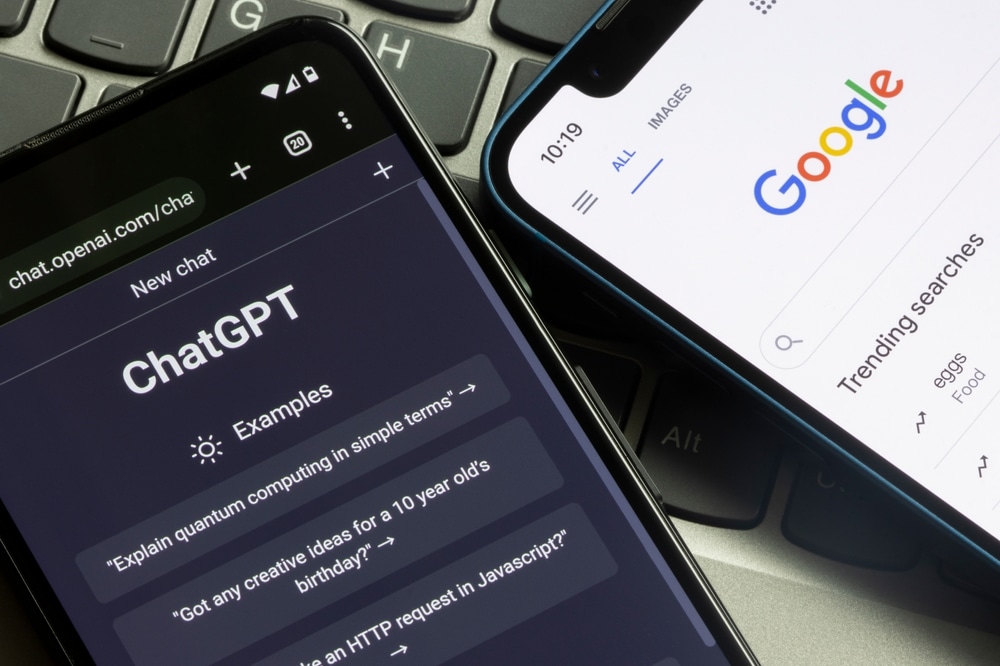
The Shift From Traditional Search to AI-Mediated Discovery
For most of the last twenty years, law firm marketing has been built around a relatively stable search model. A prospective client typed a query into Google, reviewed a page of links, compared a few websites, and then chose a firm to contact. Rankings mattered because blue-link visibility largely determined who got the click, who earned the consultation, and who had the opportunity to convert a lead into a retained client.
That model has not disappeared, but it is no longer the whole market. Search behavior is being reshaped by AI-driven systems that summarize, synthesize, and recommend information directly inside the search experience. Google’s AI features now influence how users discover information. ChatGPT search and Perplexity both provide conversational answers backed by web sources rather than presenting only a list of links.
Google explains that its AI features, including AI Overviews and AI Mode, are designed to help people ask more complex questions and explore topics with follow-ups. OpenAI describes ChatGPT search as providing timely answers with links to relevant web sources. Perplexity similarly describes itself as an AI-powered search engine that searches the web and delivers conversational answers with citations.
Law Firms That Adapt To AI Early Will Dominate Their Markets
For law firms, the implications are substantial. The legal consumer of 2026 may still click through to a website, but increasingly that decision is being influenced by information surfaced before the click. Potential clients may encounter your firm’s name, content, or point of view inside an AI-generated answer, a citation panel, or a synthesized comparison before they ever reach your site. In some cases, they may get enough of an answer that they never click at all.
This changes what “visibility” means. It is no longer enough to rank for a small set of commercial keywords. Law firms now need content that is understandable to search systems, trustworthy enough to be cited, structured enough to be retrieved, and authoritative enough to be referenced in AI-generated responses. That requires changes in content strategy, technical SEO, digital PR, local search execution, and even paid media planning.
The firms that adapt early will not simply protect traffic. They will reposition themselves for how legal consumers now discover and evaluate counsel. The firms that do not may find that even strong historical rankings no longer produce the same share of qualified opportunities.
How Large Language Models Interact With Legal Content
AI Search Does Not Behave Like Classic Web Search
Traditional search engines index pages and rank them. AI search systems do more than retrieve; they interpret, summarize, and compose responses from multiple sources. Google’s documentation for site owners makes clear that AI features can include links to web pages and can expose content in new search experiences. OpenAI’s own product and help documentation explains that ChatGPT search can automatically or manually search the web and provide answers with linked sources. Perplexity states that its responses include citations and links to original sources so users can verify what they are reading.
This distinction matters because legal marketers often assume that if they know how to rank a page, they know how to appear in AI results. That assumption is incomplete. A page may rank well and still be a poor source for AI retrieval if it is vague, thin, structurally confusing, or overly optimized for old keyword conventions. Conversely, a page that answers a specific legal question clearly and authoritatively may be cited in an AI answer even if it is not the single highest-ranking page for a broad head term.
Retrieval-augmented Generation Changes What “Optimization” Means
Many modern AI search experiences use retrieval-augmented generation, often shortened to RAG. In practical terms, this means the system retrieves relevant content from an index or live web sources and then uses that material to generate an answer. OpenAI’s developer documentation explains that the web search tool can retrieve information from the web before responding. ChatGPT search may send search queries and general location information to external search infrastructure when web search is enabled. Perplexity’s Search API documentation similarly emphasizes access to ranked web search results from a continuously refreshed index.
For law firms, this means optimization is no longer only about ranking pages for exact-match keywords. It is also about making those pages retrievable, extractable, and quotable. A strong AI-era legal page tends to do four things well. It states the issue clearly, answers the likely question directly, provides enough depth to support trust, and is structured in a way that a machine can parse easily.
Legal oCntent Is Especially Sensitive Because It Sits In A High-trust Category
Google continues to emphasize the importance of helpful, reliable, people-first content, and the company’s broader guidance around E-E-A-T remains especially relevant in high-stakes categories such as law. Google’s documentation states that its systems prioritize helpful, reliable information created to benefit people. Search Central guidance on E-E-A-T clarifies that experience, expertise, authoritativeness, and trustworthiness are central to how high-quality content is evaluated. Google has also stated that AI-generated content is not inherently disallowed, but using generative AI to produce large quantities of low-value content can violate its spam policies on scaled content abuse.
This is particularly important for law firms. AI search systems are more likely to favor content that appears careful, jurisdictionally accurate, and professionally credible. In legal marketing, precision is not optional. If your content confuses a procedural standard, uses vague legal terminology, or appears designed only to capture traffic, it becomes less useful both to human readers and to AI systems trying to assemble trustworthy summaries.

Zero-Click Search and the New Lead Generation Environment
Clients Are Gathering More Information Before They Ever Visit Your Website
One of the most significant effects of AI search is that more informational needs are being resolved inside the search layer itself. Google’s own documentation notes that AI features support longer, more specific, and follow-up questions. OpenAI and Perplexity both present answers directly in a conversational format with linked sources. That means users are increasingly learning the basics of a legal issue without landing on a law firm website first.
For law firms, this contributes to the broader zero-click trend. A prospective client may ask what comparative negligence means, how child support is modified, whether a DUI can be expunged, or what a trustee owes beneficiaries. If the AI answer is strong enough, that user may never click the originating source.
That sounds threatening, but it does not necessarily mean fewer opportunities. It means the path to opportunity is changing. Users may move from an AI answer to a branded search, a direct Google Business Profile visit, a Local Services Ad, or a phone call. Visibility is no longer measured only in website sessions. It increasingly includes citation presence, brand mention frequency, and whether your firm is part of the answer set.
Legal Consumers Are Asking More Complex Questions, Earlier
A classic search behavior pattern was to begin with short keywords and only later ask detailed questions. AI interfaces invert that. Users now ask complete, nuanced questions at the start. Google’s Search Central blog specifically notes that people are asking longer and more specific questions in AI search experiences, including follow-up questions.
For legal marketing, this changes the entire content planning model. If users are beginning with fully formed questions such as “Can I move out of Illinois with my child after divorce if the other parent objects?” or “How is a Wisconsin worker’s compensation permanent partial disability rating calculated?” then the winning content strategy is not a thin city page with a commercial keyword repeated fifteen times. It is a deeply developed answer architecture that addresses complex user needs with clarity and structure.
Zero-click Visibility Shifts Emphasis From Traffic Alone To Authority And Conversion Paths
Law firm marketers have traditionally judged SEO success by sessions, rankings, and leads. Those metrics still matter, but AI search requires a broader performance lens. If your content is repeatedly cited in answers, your firm may gain authority and branded demand even if traffic growth flattens. If users encounter your brand in AI-generated responses, then find your Google Business Profile and call directly, your organic reporting may understate your real influence.
This means law firms need tighter attribution systems, stronger branded search monitoring, and a more integrated view of organic, local, and paid traffic. The question is no longer just “How many visits did this article get?” It is also “Did this content help our firm become visible inside the answer environment that shapes client choice?”
From Keywords to E-E-A-T and Topical Authority
Keyword Targeting Is Still Useful, But It Is No Longer The Center Of Gravity
Keywords still matter because they reveal intent and demand. But they are no longer the organizing principle of a successful legal content strategy. In the AI era, law firms need to build subject depth, not just page-level relevance.
Google repeatedly emphasizes people-first content, and its guidance about succeeding in AI search focuses on creating unique, non-commodity material that satisfies users. That means a law firm’s content library should not be a loose collection of disconnected blog posts. It should be an organized body of work that demonstrates mastery within a practice area.
A personal injury firm, for example, should not stop at a broad page about car accidents. It should also have clearly structured resources on comparative negligence, medical liens, uninsured motorist claims, soft tissue injuries, truck accident liability, litigation timelines, settlement negotiations, and local court procedure where relevant. A family law firm should not rely only on a divorce page; it should build depth around parenting allocation, child support, relocation, emergency motions, maintenance, college contributions, and post-decree modification.
E-E-A-T Should Shape How Legal Content Is Written, Not Just What It Covers
Google’s E-E-A-T framework is often discussed as a checklist, but for law firms it should function as a writing and editorial standard. Experience means that content reflects real-world legal understanding, not generic summaries. Expertise means that it is technically accurate. Authoritativeness means the firm is recognized beyond its own website. Trustworthiness means that statements are careful, sourced when appropriate, and free from exaggerated promises.
In practical terms, this means your legal content should sound like it was written by a firm that actually handles the matters it describes. It should explain legal consequences, common procedural bottlenecks, strategic considerations, and real-world client concerns. It should avoid thin definitions and generic platitudes. It should also avoid overstated claims that could conflict with professional responsibility rules. ABA Model Rule 7.1 prohibits false or misleading communications about a lawyer’s services, and that principle should inform all AI-era legal content.
Content Clusters Are Increasingly Important Because AI Systems Reward Coherence
A law firm that wants to be cited in AI-generated answers should not think only in terms of isolated articles. It should think in terms of topical systems. Comprehensive pillar pages supported by well-developed cluster content create a stronger authority profile than disconnected posts. This approach also improves internal linking, semantic clarity, and machine interpretability.
In the AI era, one of the most durable competitive advantages for law firms is not merely having “a lot of content,” but having content that forms a coherent legal knowledge base.

Technical SEO for AI Search: Making Legal Content Understandable to Machines
Structured Data Helps Search Systems Interpret Entities And Page Meaning
Google’s documentation makes clear that structured data helps its systems understand the content of a page and gather information about entities on the web. LocalBusiness schema can describe business hours, departments, and related business details, while FAQPage and Article schema can help search systems understand how content is organized. Google also notes that structured data can power richer search experiences, though use of markup does not guarantee a rich result.
For law firms, schema is not just a cosmetic enhancement. It is a machine-readable way of clarifying who you are, where you are, what services you provide, and what type of content a page contains. In an AI-driven environment, that extra layer of clarity matters.
At a minimum, firms should think seriously about implementing Organization or LocalBusiness schema, attorney or professional entity markup where appropriate, Article markup on major legal resources, and FAQPage markup where the page genuinely consists of authoritative question-and-answer content.
Site Speed And Page Experience Still Matter Because Retrieval Systems Prefer Usable Pages
Google’s page experience documentation notes that while not every page experience signal directly boosts rankings, improving page experience is aligned with what Google’s systems seek to reward. Secure connections, accessibility, reduced intrusive interstitials, and strong usability all matter.
For law firms, this means AI readiness is not only about content semantics. It is also about making sure the site is fast, mobile-usable, and structurally clean. A page that answers an important legal question but loads poorly, shifts excessively on mobile, or buries the answer under intrusive pop-ups is less useful both to human visitors and to systems that aim to surface satisfying results.
Content Structure Should Be Designed For Extraction
AI systems are especially good at using content that is easy to segment. That means clear H2 and H3 hierarchies, precise answers early in sections, and logical progression throughout the page. Long legal pages do not need to be simplified into bland summaries, but they should be organized so the system can identify where a question is answered and what supporting context follows.
A law firm that writes with extraction in mind is not “writing for bots.” It is writing in a disciplined, readable form that helps both humans and machines process the material accurately.
Why Off-Site Validation Matters More in AI Search
AI Systems Rely Heavily On Source Trust And Corroboration
A law firm’s website is not the only place where authority is judged. AI systems are more likely to trust firms that are mentioned across reputable third-party sources, legal directories, news outlets, and professional organizations. Perplexity’s emphasis on verifiable sources and citations, along with Google’s broader trust framework, reinforces that off-site corroboration matters.
This means digital PR, legal directory management, and external citation strategy should be treated as core components of AI search readiness. If your firm has no footprint beyond its own site, it is harder for AI systems and users alike to view it as an established authority.
Legal Directories And Third-party Profiles Are Not Just Referral Channels
For years, directories such as Avvo, Justia, Martindale-Hubbell, FindLaw, and state bar listings have been treated primarily as referral or citation channels. In the AI era, they also function as trust infrastructure. They help validate the existence, location, practice areas, and attorney roster of the firm. They often contain reviews, awards, credentials, and office details that reinforce entity consistency.
This does not mean every directory listing is equally important. It does mean that incomplete, inconsistent, or neglected profiles are now a bigger liability than many firms realize.
Digital PR Becomes More Valuable Because Brand Mentions Influence Retrieval Confidence
Mentions in local media, legal publications, association newsletters, and industry commentary have long helped law firms build authority. In AI search, they become even more important because they create a wider citation footprint. If your attorneys are quoted in articles about changing laws, court decisions, or local legal developments, those mentions help establish the firm as a known source in the broader information ecosystem.
How AI Is Reshaping PPC for Lawyers
Organic Uncertainty Usually Increases Pressure On Paid Channels
As AI search absorbs more informational queries and compresses the number of organic clicks available, some law firms will increase investment in paid media to maintain visibility. This is likely to intensify competition in already expensive areas such as personal injury, family law, criminal defense, and immigration.
That does not mean paid search becomes less useful. It means efficiency matters even more. Campaigns must be tightly geo-targeted, conversion tracking must be more accurate, and landing pages must be stronger because firms can no longer assume that broad visibility at the top of the funnel will remain stable.
AI May Change How Paid Placements Are Experienced, But Local Intent Still Matters
Even as interfaces evolve, local legal searches remain commercially valuable because the need is real and time-sensitive. Local Services Ads, Google Ads with location assets, and properly optimized Google Business Profiles will continue to matter. Google’s own business-facing materials describe Local Services Ads as a way to connect with local customers and pay for leads rather than clicks, while platform policies caution that targeting areas too far from the real business location can create a confusing user experience.
For law firms, the future of paid search is likely to reward those who combine local precision with stronger organic authority. PPC will not replace SEO, it will increasingly depend on it.
Immediate Actions Law Firms Should Take
A law firm that wants to compete effectively in AI search should begin with a practical audit. First, assess whether your core practice area pages truly answer the questions real clients ask. Second, review your site architecture to see whether your content is organized as a coherent authority system or a disconnected collection of posts. Third, evaluate your technical foundation, including schema, page speed, internal linking, and mobile usability. Fourth, review your off-site authority signals, including legal directories, local citations, reviews, and media mentions. Fifth, analyze your paid search structure to make sure it complements rather than competes with your local SEO and branded demand.
The immediate objective is not to “game AI.” It is to become the kind of legal source that AI systems want to cite because your content is clear, accurate, useful, and corroborated by the broader web.
Frequently Asked Questions About AI Search and Law Firm Marketing
Will AI Search Eliminate The Need For Traditional Legal SEO?
No. Traditional SEO still matters because search engines continue to crawl, index, rank, and retrieve web pages. What has changed is the way users interact with those results. Law firms still need strong organic visibility, but now they also need content that performs well inside AI-driven environments. The future is not SEO or AI search. It is SEO adapted for AI search.
How Can A Law Firm Increase Its Chances Of Being Cited In AI-generated Answers?
The strongest path is to produce highly structured, clearly written, jurisdictionally accurate legal content that answers specific questions with enough depth to inspire trust. Beyond the page itself, the firm also needs corroborating signals such as authoritative backlinks, local citations, complete legal directory profiles, and a strong reputation footprint. AI systems are more likely to cite sources that appear both useful and trustworthy.
Does AI-generated Search Mean Website Traffic Will Decline For All Firms?
Not necessarily, but it may reduce clicks for purely informational queries. Firms with weak content may experience declines because users get enough information without visiting the site. Firms with stronger authority may gain in other ways, including more branded searches, stronger local engagement, and greater citation visibility. The effect is not uniform across all firms or all practice areas.
Is It Safe For Law Firms To Publish AI-assisted Content?
Yes, if the content is carefully edited, reviewed, and improved so that it is accurate, useful, and people-first. Google has stated that AI-generated content is not automatically against its policies, but scaled low-value content can violate spam guidelines. In legal marketing, the standard should be even higher because errors in legal content can damage trust and potentially create ethical risks.
How Should Law Firms Think About Privacy In AI-driven Search?
Law firms should assume that public-facing website content can be retrieved, summarized, and cited by AI search systems. That means public content should never contain sensitive or confidential client details unless disclosure is fully appropriate and authorized. Privacy-sensitive material should be handled within secure client systems, not public marketing pages. OpenAI’s help documentation also notes that web search can send search queries and general location information to external systems when used, which is another reminder that public search behavior and public content exist in a broader retrieval ecosystem.
Is Adapting For AI Search Expensive?
It can be resource-intensive, but it is usually less about adding entirely new channels than about improving what already exists. Many law firms already have content, directory profiles, local SEO infrastructure, and PPC campaigns. The challenge is that these assets were often built for an older search model. Adapting for AI search means improving clarity, structure, authority, and consistency. In most cases, that is a strategic redevelopment issue rather than a complete rebuild.
What Law Firms Should Do Now
AI search is not a passing trend. It is a structural evolution in how people find information, evaluate options, and choose service providers. For law firms, the practical effect is that traditional SEO alone is no longer enough. Content must be answer-ready. Technical SEO must be machine-readable. Brand authority must be validated beyond the website. And local, organic, and paid channels must work together rather than exist in silos.
The firms that move first will be best positioned to benefit from this transition. They will become more visible in AI-generated answers, more trusted in the eyes of search systems, and more resilient as user behavior continues to shift away from the classic ten-blue-links model.
Contact Forward Lawyer Marketing To Discuss AI Search Optimization
If your law firm has not yet evaluated whether its website, content architecture, citations, and local visibility are ready for AI-driven search, now is the time to do it. Start with a practical audit of your most important pages, your directory footprint, your structured data, and your branded search visibility. Then build a plan that aligns your digital presence with how legal consumers actually search today.
A law firm that is visible in both traditional search and AI-generated search is not just protecting traffic. It is building the kind of durable authority that drives growth in the next phase of legal marketing.
Partnering with a legal marketing specialist who understands both traditional SEO and AI optimization can provide a significant advantage. Take the next step toward future-proofing your firm’s digital presence and ensuring that you remain visible in an increasingly AI-driven search landscape.
Partner with our law firm SEO specialists who understand the complexities of modern search and can help position your firm at the forefront of the evolving digital landscape. Contact Forward Lawyer Marketing at (888) 590-9687 for a free consultation and site audit.
